From fleet manager to energy manager
Feature
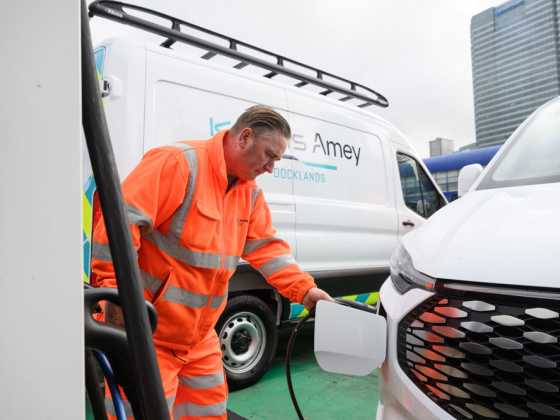
As fleets accelerate their shift to electric vehicles, managing energy becomes as critical as managing vehicles. From grid capacity and smart charging to onsite renewables and emerging V2X technology, fleet managers must navigate a rapidly evolving landscape
Planning and delivering an electric vehicle charging project increasingly requires fleet managers to think like energy managers.
Grid capacity is often the first and most fundamental consideration, because the electricity available on site will dictate how many charge points can be installed, how quickly vehicles can be charged and what level of investment is required.
Understanding a site’s agreed supply capacity, its current energy demand and the headroom available for new loads helps prevent overloads and unexpected outages. Where capacity is tight, upgrades may be possible through the district network operator, but these can be expensive and time-consuming. Many fleets therefore look to alternatives such as smart charging, which automatically adjusts charging power in line with real-time usage across the site, or onsite generation and storage, which can supplement the grid and reduce strain.
A site survey is essential to identify power requirements, location constraints and groundworks early, and rented premises add another layer of complexity as landlord approval and legal processes can extend timelines.
Intelligent charging
Once the fundamentals of supply and installation are understood, attention often shifts to how charging can be managed intelligently over time. Demand-side response (DSR) is becoming increasingly relevant, particularly for fleets with predictable charging windows. By shifting charging to off-peak times or moments when renewable energy is abundant, fleets can reduce energy costs while supporting wider grid stability. Smart charging platforms can automate this process, turning parked EVs into flexible assets that help balance demand rather than add to it. As electricity systems decarbonise, this flexibility becomes more valuable, and fleet operators can benefit from incentives or reduced tariffs in exchange for providing it.
Interest is also growing in bi-directional technologies such as vehicle-to-grid (V2G), which enable EVs to discharge stored energy back into a building or the grid. For fleets with large dwell times, this turns vehicles into mobile energy storage units capable of supporting peak demand, smoothing renewable generation or even generating revenue.
V2G is part of a broader suite of technologies known collectively as Vehicle-to-Everything (V2X), which includes applications such as powering buildings directly (V2H) or operating equipment (V2L). While still emerging in commercial fleets, V2G pilots are demonstrating its potential. On the Isle of Wight, for example, the University of Salford and partners have deployed a bi-directional charger at a hotel as part of the DriVe2X project. Their smart algorithm determines when vehicles should charge or discharge based on energy prices, building needs and driver requirements. This approach not only reduces operational costs and emissions but also shows how EVs can meaningfully contribute to local energy resilience.
Renewable energy and storage
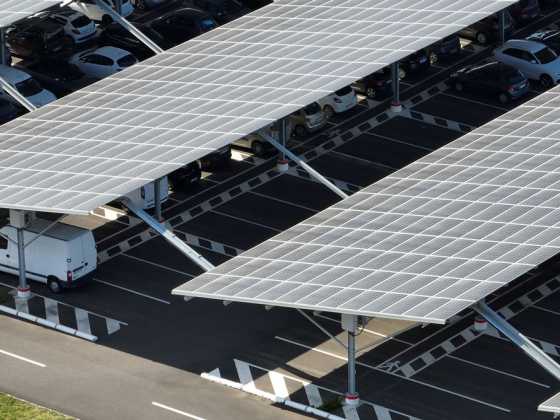
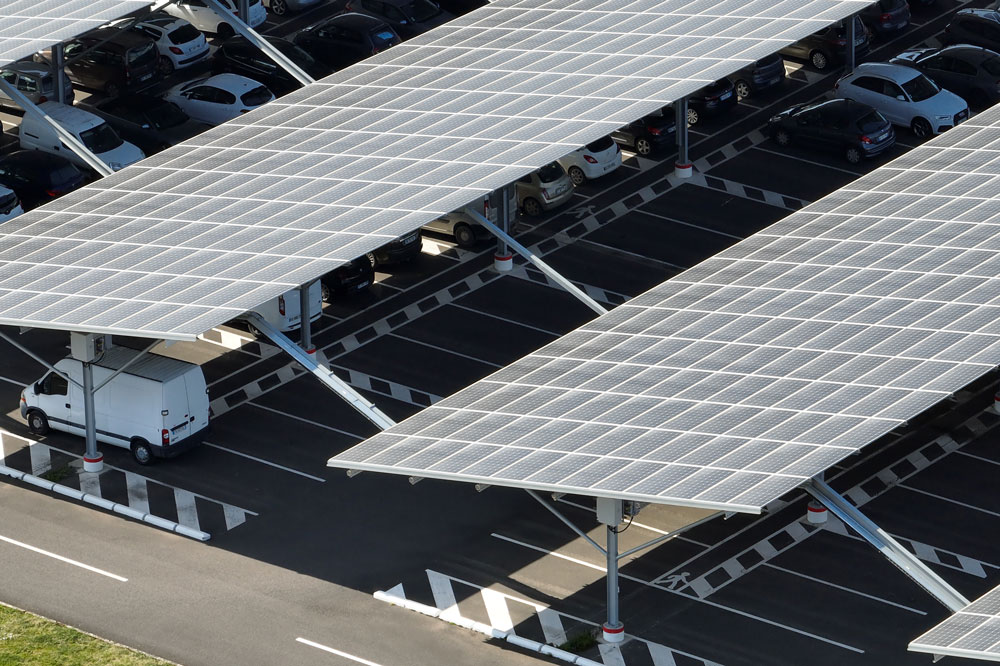
Renewable energy and onsite storage systems add another dimension to a fleet charging strategy. By generating clean electricity through solar or wind technologies and storing excess in batteries, fleets can reduce their reliance on the grid, cut costs and increase control over their energy use. Energy Management Systems then coordinate when to charge, store or export power to optimise performance and cost. Dundee’s Princes Street charging hub illustrates what this can look like in practice. The UK’s first EV charging facility to integrate solar canopies and battery storage, it combines 36kW of solar PV with a 90kWh battery that prioritises renewable energy for vehicles before exporting any surplus. Designed with scalability in mind, the hub can accommodate larger batteries and more powerful chargers as technology evolves, demonstrating a model that fleets can replicate at different scales.
Innovation continues to accelerate across the sector, and research and real-world application are converging to create smarter, more flexible charging ecosystems.
For fleet managers, this opens opportunities to reduce costs, improve sustainability performance and build resilience against future energy volatility. As fleet electrification gathers pace, integrating energy considerations into every stage of project planning, from capacity checks to smart systems and renewable integration, will be central to long-term operational success.