Insight into government electric vehicle grants
Feature
A £650 million Electric Car Grant is helping to bring down the upfront cost of going electric for drivers and fleet operators, whilst also rewarding the most sustainably produced vehicles. With the plug-in van and truck grant also extended, we examine what funding is available to help lower the costs of moving to electric
The UK’s transition to cleaner transport took a major step forward in July 2025 with the launch of a £650 million Electric Car Grant (ECG) – a scheme designed to make new battery electric cars more affordable while rewarding the most sustainable manufacturing practices.
Announced as part of the UK’s plan to move to zero-emission mobility, the grant tackles the high upfront cost that often acts as a barrier to adoption. By offering discounts of up to £3,750 at the point of sale, the ECG aims to close the price gap between ICE vehicles and electric models.
A grant designed for sustainability
What sets the Electric Car Grant apart from previous incentive schemes is its direct link to manufacturing sustainability. Eligibility is restricted to new battery electric cars priced at £37,000 or under, but crucially, models must also meet environmental benchmarks that look beyond tailpipe emissions.
The grant has two tiers. Cars that achieve the highest sustainability standards qualify for the maximum £3,750 discount, while those meeting core environmental criteria are eligible for £1,500. Vehicles that fail to meet the minimum standards will not receive any support – a move intended to recognise the importance of reducing embedded carbon across a vehicle’s entire lifecycle, not only when it’s on the road.
So far, eight vehicles meet the criteria for the full £3,750 discount, while a further 32 models qualify for the £1,500 grant. Manufacturers must apply for inclusion in the scheme, with the Vehicle Certification Agency (VCA) assessing technical requirements and the Office for Zero Emission Vehicles (OZEV) evaluating each model’s environmental credentials. Funding for the scheme is confirmed until the 2028–29 financial year.
According to the government, the grant has already helped over 40,000 drivers choose electric since its launch in July.
Transport Secretary Heidi Alexander described the grant as both a practical saving for drivers and a strategic opportunity for UK industry. She said: “This EV grant will not only allow people to keep more of their hard-earned money – it’ll help our automotive sector seize one of the biggest opportunities of the 21st century.”
Growing consumer confidence
Early signs suggest the grant is already shifting buyer behaviour. Ian Plummer, chief commercial Officer at Autotrader, noted a surge in interest for eligible EVs on the platform. He said: “The Electric Car Grant is helping to make electric cars more affordable for thousands of car buyers, which is vital if we are to accelerate the rate of adoption. We can clearly see the impact the grant is already having on consumer interest, with the number of people viewing grant eligible models on Autotrader increasing by over 100 per cent in some instances. With news models added to the scheme, we will no doubt see similar levels of interest.”
Referring to a £25 million scheme to make it easier for residents without driveways to install home chargers, Plummer also commented: “EVs enjoy significant running cost benefits, but only when the cars can be charged mainly on driveways or cheaper off-street locations. This investment is vital to ensure no driver is left behind on the journey to electric.”
AA President Edmund King echoed these sentiments, emphasising that upfront affordability remains a major sticking point for many motorists. “Drivers frequently tell us that the upfront costs of new EVs are a stumbling block. It is great to see some of these more substantial £3,750 discounts coming online because for some drivers, this might just bridge the financial gap to make these cars affordable. As more cars qualify for the biggest savings, more drivers will be tempted to go electric.”
BEAMA CEO, Yselkla Farmer added: “BEAMA’s latest market pulse shows that the Electric Car Grant is leading to positive trends in new EV inquiries to date and its continued support by this government is a welcome measure, providing certainty and improving confidence for UK EV charge point manufacturers in the UK as the place to invest. With more cars becoming eligible for the top level of the grant the government’s ambitious ZEV mandate is becoming increasingly achievable.”
Support for vans and trucks
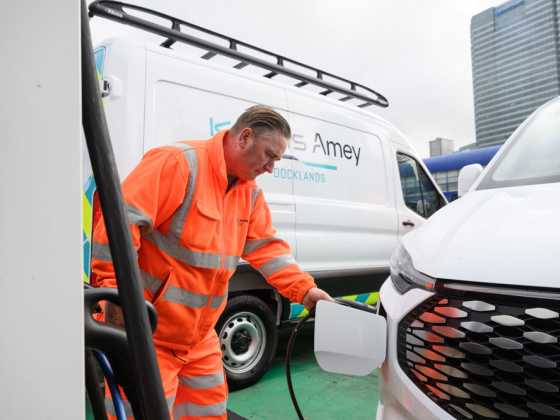
It isn’t only car buyers who stand to benefit. The government has also confirmed that the plug-in van and truck grants – a crucial source of support for tradespeople and logistics operators – will continue until at least 2027.
Under the scheme, small vans can receive discounts of up to £2,500, with large vans eligible for up to £5,000. Support extends further for heavier vehicles, with grants of up to £16,000 for small trucks and £25,000 for large trucks. Funding levels for the 2026–27 financial year will be confirmed in due course.
Major fleet operators have welcomed the decision. John Boumphrey, UK country manager at Amazon, called the extension “a critical step” in helping companies decarbonise. “We welcome the government’s continued commitment to supporting the electrification of commercial fleets. Decarbonising the transportation network is essential to achieving our goal of net-zero carbon emissions across our operations by 2040.”
For small businesses and tradespeople, the impact may be even more immediate. Checkatrade CEO Jambu Palaniappan described the continuation of the grants as “a big boost for tradespeople across the UK,” noting that lower running costs, exemption from urban charges like ULEZ, and greater certainty over future regulations would help members “keep moving, win more work, and build a future that’s both cost-effective and sustainable.”
Driving the transition forward
Together, the Electric Car Grant and the extended van and truck incentives represent a significant financial commitment towards EV adoption.
By lowering costs for drivers and businesses while rewarding sustainability in manufacturing, the government aims to accelerate the pace of change – and ensure the benefits of electric mobility are felt across the economy.