Preparing for 2035
Feature

With the UK preparing to end the sale of new petrol and diesel cars in 2030, and vans and hybrids in 2035, a zero-emission vehicle future is rapidly approaching. So how can fleet operators get ready for the transition?
In four short years, manufacturers in the UK will no longer be able to sell new petrol or diesel cars, with the 2030 ICE ban taking effect. Hybrid cars, however, will still be allowed until 2035, as will petrol, diesel and hybrid vans.
At the same time, the ZEV Mandate is compelling manufacturers to steadily increase the proportion of electric vehicles they produce or face penalties. As a result, the number of electric models is rising, with around 130 electric cars and 40 electric vans now available.
For organisations operating car or van fleets, the clock is ticking to make the move to electric. The benefits of making the switch now means a future proofed fleet. So where should you start?
Knowing which vehicles to start with
To identify which vehicles in a fleet are ready to move to electric, it is essential to analyse operational patterns such as journey types, typical mileages and duty cycles. Telematics can support this process by providing suitability assessments based on mileage, efficiency and total cost of ownership data. Some systems use artificial intelligence to process large quantities of data and recommend which vehicles are most appropriate for electrification. Once an electric fleet is in place, telematics can continue to improve performance by monitoring energy usage, tracking battery levels and helping with route planning and charging schedules.
Alongside vehicle selection, fleet managers must consider their charging requirements. They will need to determine whether vehicles can charge at employees’ homes, rely on the public charging network or require new workplace charging infrastructure. If home charging is an option, employers should discuss installation with employees and establish how charging costs will be reimbursed.
There are now over 86,000 public chargers in the UK, meaning that fleets that have to charge out and about, have increasingly more choice. However, planning is still recommended as there are areas in the UK where the network is patchy. While new public charge points above 8kW and existing charge points over 50kW must offer contactless payment options, chargers with a power output of 7kW or less may still require app registration or a network account.
Fleet operators may want to issue charge cards to drivers to simplify access, consolidate billing, and avoid confusion around reimbursements for work mileage.
Charging vehicles
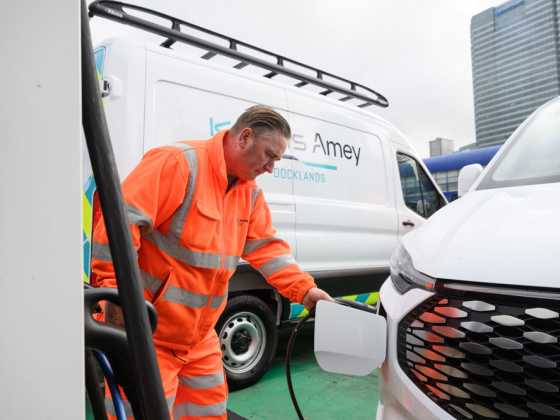
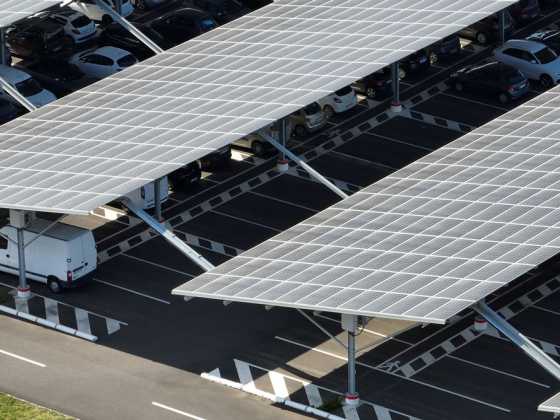
If workplace charging is needed, understanding the site’s power availability is crucial. This involves reviewing the location’s agreed supply capacity, its current energy usage and the amount of spare capacity available for charging infrastructure. This assessment helps prevent power overloads and outages. If spare capacity is limited, grid connection upgrades may be possible through the district network operator, although this can be expensive. Alternatives include using smart chargers with load balancing capabilities or generating onsite power, such as through solar panels combined with battery storage. Load balancing systems can automatically adjust the energy supplied to chargepoints based on real-time usage across the site.
A site survey is an important stage of the installation process. Engineers will visit to assess how chargepoints can be installed, what power will be required and whether any groundworks are necessary. If the property is rented, landlords must give consent for any charging installation. This can take time and may involve legal processes, so it is advisable to start discussions early.
As part of planning, it is useful to understand the different charging speeds available. Fast charging typically ranges from 7kWh to 25kWh and is suitable for workplace or overnight depot charging. Rapid charging operates at around 50kWh to 100kWh and provides quicker turnaround times. Ultra-rapid charging – between 150kWh and 400kWh – is generally used at public charging hubs, short-stay locations and for electric HGVs. It is also important to distinguish between AC and DC charging. AC chargepoints draw alternating current from the grid and convert it to direct current within the vehicle, with charging speeds limited by the car’s onboard hardware. DC chargers house the converter within the charger itself, allowing power to be delivered to the vehicle more quickly.
When choosing a chargepoint installer, it is important to review the functionality of their back-office system. A comprehensive system should allow operators to monitor charging sessions, track speeds and payments and produce CO2 reports. It is equally important to understand the level of aftercare provided, including maintenance support and repair services.
Grants from the government
A range of government funding schemes is available to support electrification. In the latest budget, Chancellor Rachel Reeves extended the electric car grant to 2030. The grant applies to eligible new electric cars costing £37,000 or less and provides either £1,500 or £3,750 depending on the vehicle’s environmental performance.
When annoucing the grant, Transport Secretary, Heidi Alexander, said: “We’re putting money back in people’s pockets and making it easier and cheaper for drivers to make the switch to electric, by delivering discounts of up to £3,750 on EVs.
“Our measures are driving competition in the UK EV market, boosting economic growth and supporting jobs and skills as part of our Plan for Change.”
The Autumn Budget also extended the Plug-in Van Grant until 2027. The grant currently offers up to £2,500 for small vans and up to £5,000 for larger vans, while eligible small and large trucks can receive maximum discounts of £16,000 and £25,000 respectively.
The Workplace Charging Scheme remains in place until 31 March 2026 and covers up to 75 per cent of installation costs, capped at £350 per socket and up to 40 sockets per applicant.
With four short years until the ICE car ban comes into effect, the move to electric is fast approaching. While van fleets have longer, fleet operators that begin the transition now will be better positioned for a future shaped by cleaner, more sustainable mobility.