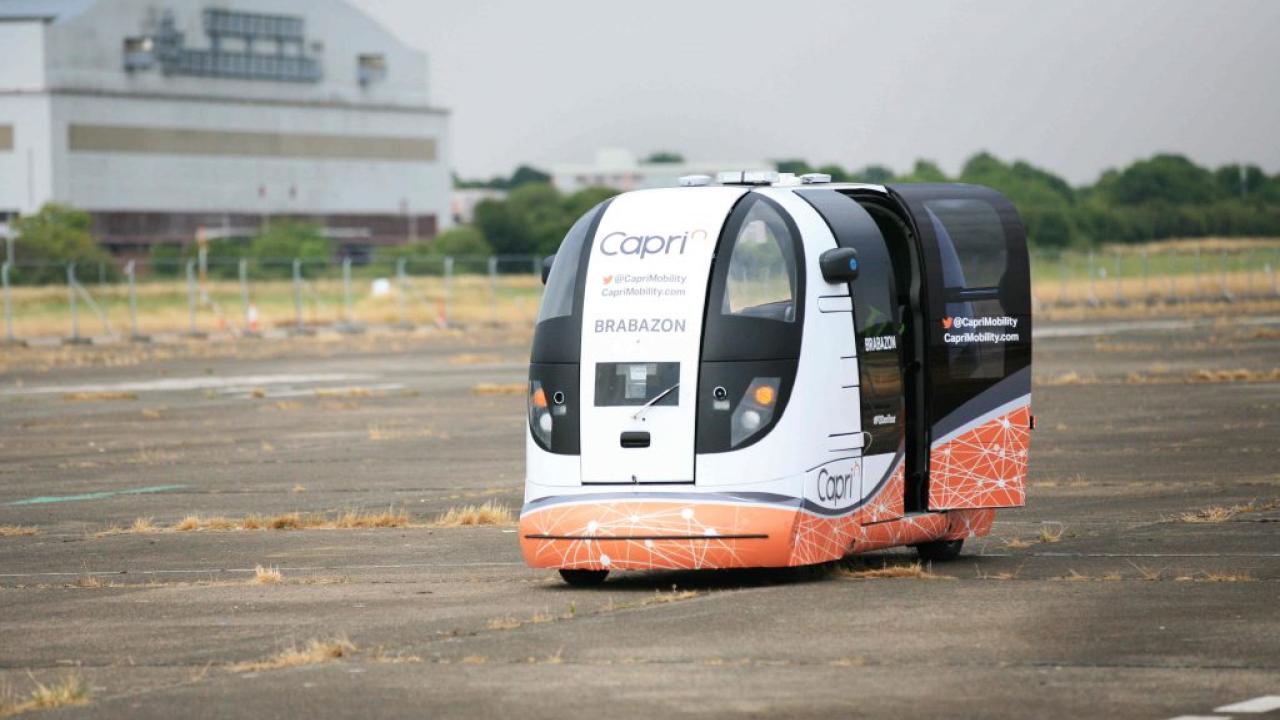
Autonomous pods, which could be used to provide mass driverless transport, have been tested on the public for the first time in Bristol.
Trialled by infrastructure firm AECOM, which is working with partners including the Bristol Robotics Laboratory, the vehicle pods use sensors, radar and vision processing to navigate areas crowded with pedestrians, push-chairs and bikes.
The project, called CAPRI, is seeing the first tests allowing members of the public to travel in the pods without any dedicated supervisor inside, with researchers studying their reaction to autonomous transport. It is hoped that they could be used in cities across the UK to move people to venues, hailed by the public using an app.
Trials on open public roads will take place later this year.
George Lunt, technical director at AECOM, said: "With a number of environmental, efficiency and mobility benefits associated with connected and autonomous vehicles, there is great potential for the UK to enter a diverse range of international markets. However, for this idea to fully develop, it is vital the public are on board and have the chance to experience a mobility service that can potentially transform the way they travel.”
CAPRI is made up of 17 businesses and academic institutions including the University of the West of England, Bristol University and Heathrow Airport. It was awarded £35 million by The Centre for Connected and Autonomous Vehicles (CAVs), the government department set up to support the early market for CAVs.