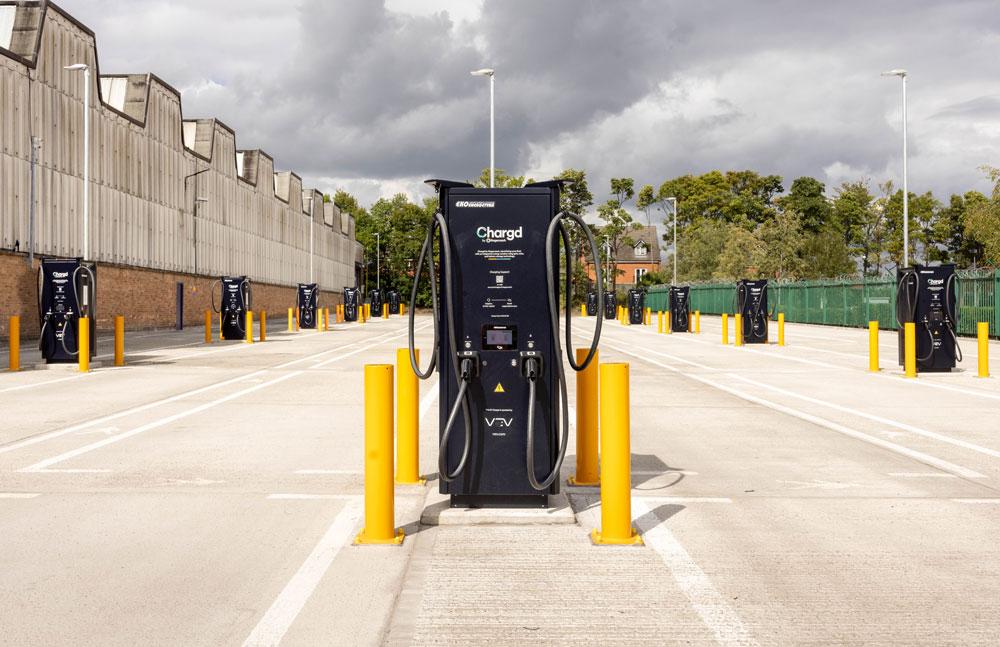
While the public charging network continues to expand, existing bus depot electric charging facilities could offer fleet operators with heavier vehicles access to high-powered, strategically located charging. Stagecoach’s Mike Smith explains how the business is sharing its own charging network to do just that
The growth of the electric vehicle charging network is essential to the UK’s transition to zero-emission transport. According to data from the European Automobile Manufacturers’ Association (ACEA), an estimated 299 truck charging hubs are expected to be constructed by 2027.
However, with more than 600,000 trucks using UK roads, the focus now needs to go beyond simply installing more chargers. We need to ensure the charging infrastructure is available in the right places, at the right times and with sufficient power to meet the demands of heavy commercial vehicles.
For large fleet operators, that distinction is critical. Commercial vehicles operate to tightly managed schedules, often carrying heavy loads over long distances. Charging therefore needs to become part of everyday route planning, alongside considerations such as driver hours, delivery windows, vehicle utilisation and operational resilience.
For fleets beginning their electrification journey, gaps in suitable charging infrastructure can make some routes difficult to operate using electric vehicles. This creates a familiar dilemma: fleet operators may be ready to invest in electric vehicles, but the charging infrastructure needed to support them can take considerably longer to plan, connect and build.
High-powered charging presents a particular challenge for heavy commercial vehicle fleets. Larger batteries require more energy to recharge, and the vehicles themselves need larger charging bays. Yet much of the existing rapid and fast-charging infrastructure has been designed around smaller battery-electric vehicles. Meeting the higher power demands of larger vehicles also depends on sufficient grid capacity and the availability of suitable connections.
However, while investment in new infrastructure continues, there’s also significant potential to make better use of charging capacity that already exists across the network.
Bus depots as a charging solution
The bus sector is already providing an example of what’s possible when it comes to fleet electrification. Many bus operators, including Stagecoach, have been electrifying their fleets and investing in substantial charging capacity at strategically located depots across the country for a number of years. These facilities have been designed around the operational requirements of large vehicles, including significant power capacity and rapid charging capability.
Electric buses and heavy commercial vehicles share some of the same infrastructure requirements. And so, where geography, physical access, vehicle compatibility and operating arrangements allow, existing bus depot charging can provide an additional option for commercial fleets on their electrification journey.
It’s important to note that this isn’t about replacing investment in dedicated truck-charging infrastructure. The public network will remain essential as the number of electric HGVs grows. However, bus depot charging can play a supporting role: providing fleets with access to suitable infrastructure now, while new, dedicated charging hubs continue to develop.
This is a solution that can help address one of the biggest practical concerns facing fleet operators – how quickly charging infrastructure can be deployed, compared with the pace at which they want to introduce electric vehicles.
Stagecoach’s Chargd initiative provides one example of this approach, with selected bus depots being made available to third-party commercial fleets to support their transition to electric vehicles. The programme is being introduced in phases, with eight depots currently live and further locations set to go live later this year.
Putting existing capacity to work
Chargd is a straightforward proposition. The charging infrastructure already installed to support Stagecoach’s own bus operations can, where capacity and operating requirements permit, also be used by other commercial vehicles.
Stagecoach’s depot charging systems manage charger output according to operational requirements. During normal operations, output can be adjusted to optimise energy use and ensure buses are ready when required. And for a commercial fleet customer who has a planned charging stop, the available output can be increased to maximise charging performance and minimise the vehicle’s dwell time.
For a commercial operator, that can make a significant difference. Rather than waiting for a dedicated charging site to be developed on a particular route, an existing depot may already provide a practical charging point that can be incorporated into a fleet’s operating schedule.
The value here is that bus depot charging infrastructure can support a wider fleet of commercial vehicles in need. A proposition such as Chargd offers a potential solution in the form of location, sufficient power, access and facilities designed around large commercial vehicles.
A real-world solution for the logistics sector
The experience of UK logistics business, Gregory Group, illustrates how this approach can work in practice.
Gregory is working towards net-zero carbon emissions from its operations by 2038, and is introducing battery-electric HGVs to its routes as part of this journey.
One challenge emerged on a regular route operated by Gregory subsidiary Pollock, between Bathgate, near Glasgow, and Inverness – a return journey of more than 320 miles. The electric HGVs managed the outbound leg, but suitable charging infrastructure for the return journey presented a significant obstacle. Public charging options in the area were limited, particularly for vehicles of this size.
Gregory partnered with Stagecoach to access its Inverness depot, where charging infrastructure can accommodate HGVs. Four HGVs now stop at the depot each day to recharge before making the return journey to Bathgate,
with charging scheduled around their operating requirements. Drivers can also access depot facilities while their vehicles charge.
For Gregory, the arrangement highlights a wider point about fleet electrification. The pace of adoption depends on the availability of suitable charging infrastructure along key routes, as much as the vehicle itself.
Paul Jefferson, group legal & sustainability director at Gregory Group, says: “Without a partner like Stagecoach, this project would be incredibly challenging, as EV charging infrastructure in northern Scotland is so sparse, particularly for the likes of artic lorries.”
A more flexible charging ecosystem
Gregory Group’s experience highlights an important consideration for the wider commercial fleet sector. Electrification is an operational challenge, shaped by how infrastructure fits into the day-to-day demands
of running a busy fleet.
As more operators look to introduce electric vehicles to reduce emissions and respond to evolving regulations, charging infrastructure needs to reflect how commercial vehicles actually operate. That means considering location, vehicle size, charging speed, dwell times, grid availability and the realities of commercial schedules.
Continued investment in dedicated truck-charging hubs will be vital, and the expansion of the public network should be welcomed. But fleet operators shouldn’t have to wait for every element of that future network to be completed before making the switch to electric vehicles.
The next phase of the electric vehicle transition will depend on building a charging ecosystem that reflects the realities of commercial transport, with infrastructure designed around the demands of fleet operations.
Utilising existing bus depot infrastructure alongside the growing dedicated charging network will not solve every charging challenge, but as commercial fleets look to move further and faster towards electrification, it could provide a practical and immediate way to keep vehicles moving while the additional infrastructure catches up.