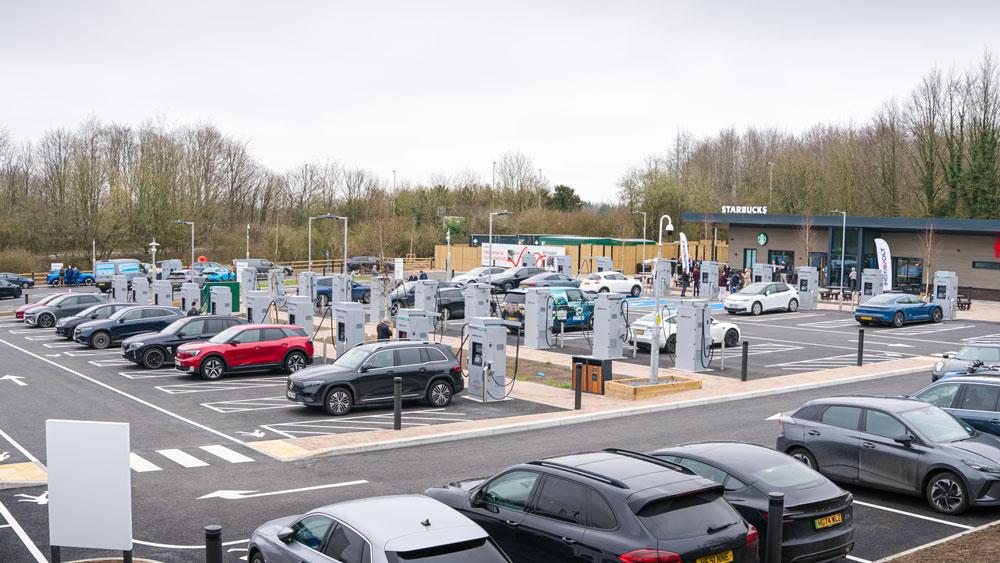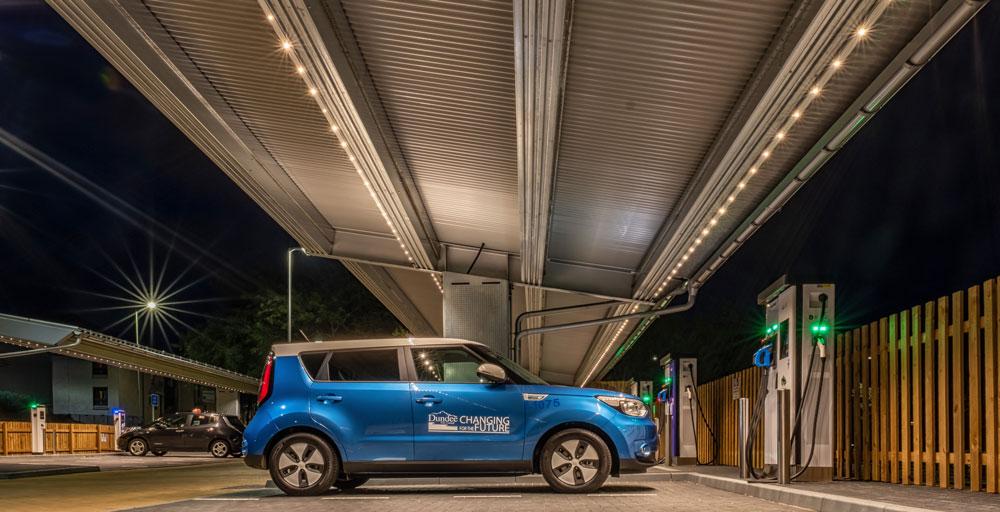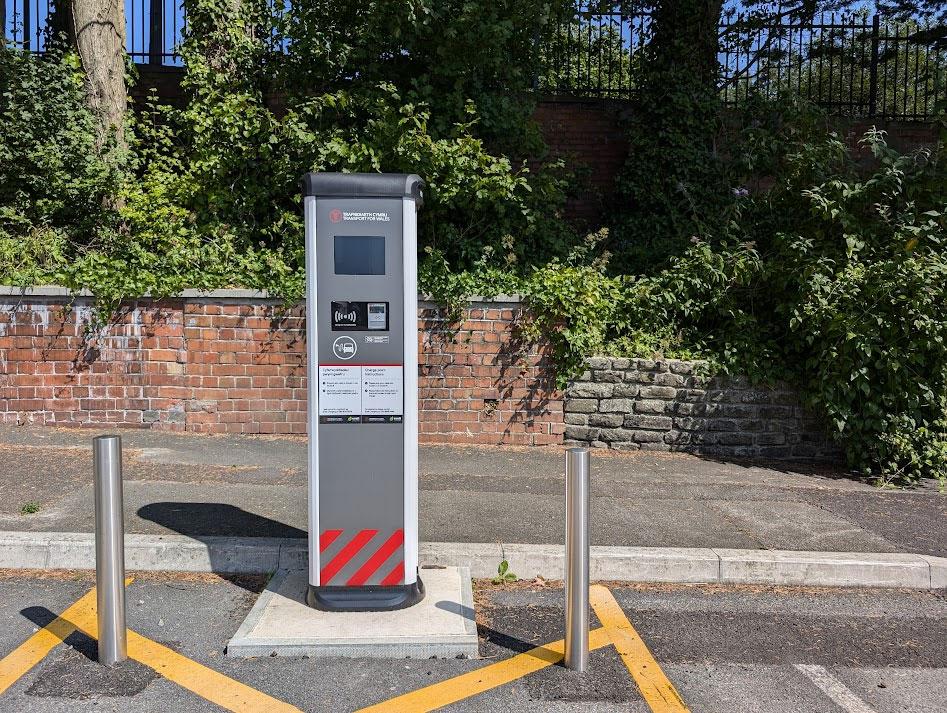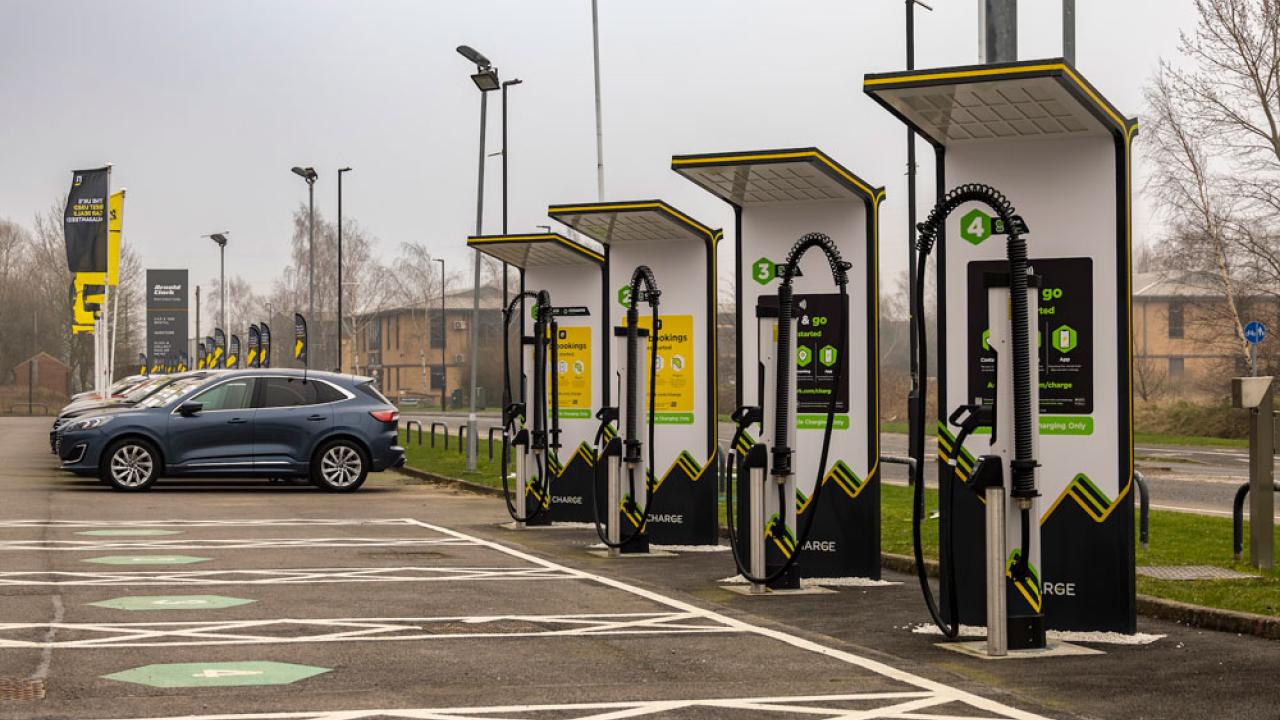
Research from Transport & Environment (T&E) has found that Europe’s public electric-vehicle charging network is expanding more quickly than the number of electric cars using it, suggesting that concerns about a widespread shortage of chargers may be increasingly outdated.
T&E finds that the European Union had approximately 1.1 million public charging points by the end of 2025 — five times as many as in 2020. With the exception of Malta, every EU member state is now exceeding the charging-capacity target established under the Alternative Fuels Infrastructure Regulation (AFIR).
AFIR requires countries to provide at least 1.3kW of publicly available charging capacity for every registered battery-electric vehicle. Across the EU as a whole, available capacity is reportedly 180% above the regulation’s minimum requirement.
AFIR also requires high-powered charging stations to be installed at regular intervals along the Trans-European Transport Network, or TEN-T. This network includes the motorways and important regional routes connecting major cities, ports and economic centres across Europe.
By June 2026, 79 per cent of the core TEN-T road network complied with the EU’s 2025 target for ultra-rapid charging. Coverage in Western Europe had reached more than 99 per cent.
Progress is also being made on the broader TEN-T Comprehensive Network, which incorporates regional motorways and primary roads. Twenty of the EU’s 27 member states had already reached their 2027 targets, while the bloc collectively had begun working towards its 2030 requirements.
Countries that initially fell behind are now recording some of the fastest rates of growth. Poland, for example, increased compliant coverage of its core network from 20 per cent at the end of 2024 to 59 per cent by June 2026.
T&E estimates that approximately 70 strategically positioned charging locations would bring more than 90 per cent of the EU’s core road network into compliance with the requirement for chargers every 60 kilometres.
Spain has the largest remaining requirement, with 22 locations needing installation or improvement. Poland requires 11 and Romania seven. Many of these sites already exist but need upgraded equipment or additional charging capacity.
This means completing much of the remaining network may depend more on targeted upgrades than on constructing large numbers of entirely new sites.
The figures indicate that the overall supply of public charging infrastructure is no longer the main obstacle to electric-car adoption in much of the EU.
However, having enough chargers does not automatically guarantee a satisfactory experience, according to T&E.
The research says that "reliability, transparent pricing and simple payment systems remain important concerns. These issues are particularly significant for people who live in flats or homes without private parking and therefore rely more heavily on public infrastructure.
"Continued investment in workplace, residential and destination charging will also be necessary. Shops, hotels, car parks and fuel stations could all play a larger role, while smart and bidirectional charging could help vehicles interact more efficiently with the electricity network.
"Europe’s next challenge is therefore not simply to install more chargers. It is to ensure that chargers work consistently, are located where drivers need them and offer clear prices and straightforward payment.
"The latest data suggests that the basic infrastructure is increasingly capable of supporting further growth in electric-car ownership. Improving the quality and convenience of that network will now be central to persuading more motorists to make the switch."