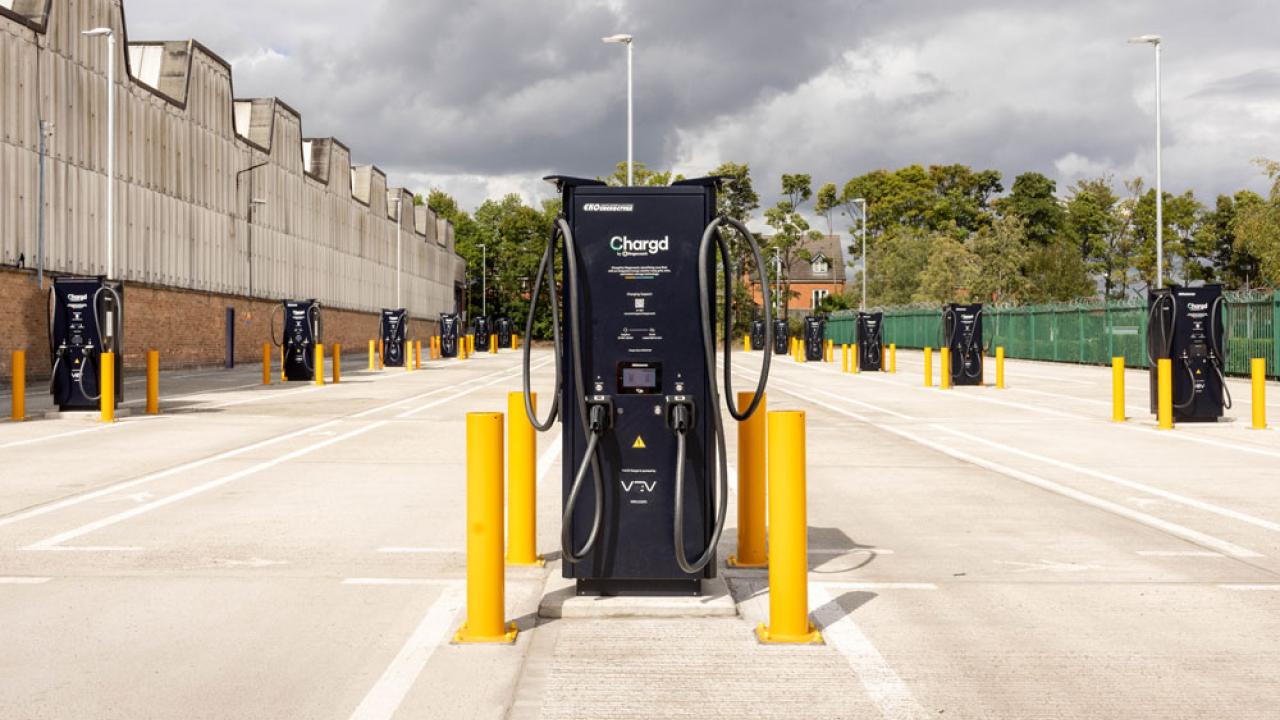
Stagecoach has launched a new B2B electric vehicle (EV) charging proposition called Chargd, turning its bus depots into commercial EV charging hubs.
This enables third party fleets to charge vehicles throughout the day from strategically located sites across the country.
The launch marks the first stage of a phased national rollout, with seven Stagecoach depots now beginning to offer the Chargd proposition and further locations across the company’s estate of over 100 depots planned throughout 2026 and beyond.
Purpose built for commercial use, Chargd is designed around the operational realities of fleet charging, including large vehicle access, high capacity power supply and rapid charging capability. Selected sites also support eHGV charging, reflecting growing demand from logistics, construction and utilities operators.
Debra Goodwin, Chief People and Customer Officer, at Stagecoach, said: “We’ve spent years electrifying our own fleet at scale, and we know that charging infrastructure is one of the biggest barriers facing businesses on that same decarbonisation journey.
“Chargd is about using that experience to go further, opening up our depots and providing practical, reliable charging that works for real world fleet operations. This isn’t a future concept. It’s live, it’s scalable and it’s designed to help businesses make the switch to electric vehicles with confidence.”
The seven initial Chargd sites are at Stagecoach depots in Inverness, Oxford, Cambridge, Kilmarnock, London (Ash Grove), Stockton and Dover, providing a national spread and demonstrating the scalability of the proposition across urban and regional locations.
“At a time when organisations are under increasing pressure to reduce emissions while maintaining operational efficiency, Chargd provides certainty and reassurance,” adds Debra. “Whether it’s for last mile deliveries, utilities or telecoms servicing, or other businesses operating large fleets, Chargd offers a robust access to reliable, large scale charging infrastructure.”
Since 2021, Stagecoach has invested more than £500m in electric vehicles and charging infrastructure and removed over 50,000 tonnes of carbon emissions over the past eight years from its own operations.