Mixed signals are stalling EV adoption, MPs told
News
10 Dec 2025
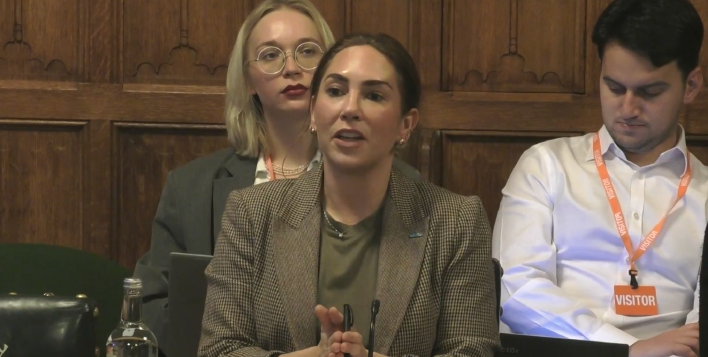
Tanya Sinclair, the Chief Executive of Electric Vehicles UK (EVUK) has told MPs that “inconsistent government policy and confused communication are undermining the UK’s shift to electric vehicles,” and are now posing a real risk to meeting the Seventh Carbon Budget.
Sinclair appeared before the Environmental Audit Committee (EAC) on 3 December, giving oral evidence as part of the committee’s inquiry into the UK’s next statutory carbon target for 2038–2042.
Tanya explained that confidence in EVs remains high, but confidence in government policy does not, and that gap is slowing progress.
“The electrification of transport is a market-led transition. But markets only succeed when policy is consistent. Right now, that consistency is missing,” Sinclair told the committee.
During the session, Sinclair highlighted the government’s Budget announcement of a 3p-per-mile road tax for EVs from 2028 as a prime example of how unclear messaging can destabilise behaviour.
Tanya said: “Some in the e-mobility sector didn’t realise the new mileage tax was under consultation. That’s how unclear communication has been. The negative impact on market confidence began immediately, even though the policy is potentially years away.”
She warned MPs that premature or confusing announcements have already nudged some drivers away from EVs and towards full hybrids; behaviour that risks slowing decarbonisation at precisely the wrong moment.
Another major theme of her evidence was the growing impact of misinformation, which Sinclair described as a direct threat to EV uptake. She told MPs that EVUK was created specifically to help drivers “see, feel and drive an EV” without entering a sales environment, addressing what she called the UK’s “confidence gap.”
“A rise in EV misinformation is directly affecting driver confidence and purchase intent. People need a trusted, impartial source of facts.”
Sinclair also highlighted outdated assumptions in early charging business models: “Many charging business models were built on utilisation assumptions that no longer reflect how people actually charge their EVs. Drivers don’t need national
charger numbers. They need to know whether charging is available where they live, work and travel.”
On van and fleet electrification, areas the committee described as “off track,” Sinclair’s view was unequivocal: “The single most important policy for fleet and van electrification is staying the course on the ZEV mandate. That stability will unlock
scale.”
She warned that any wavering would slow production, depress investment and stall the very markets needed to meet the Seventh Carbon Budget targets.