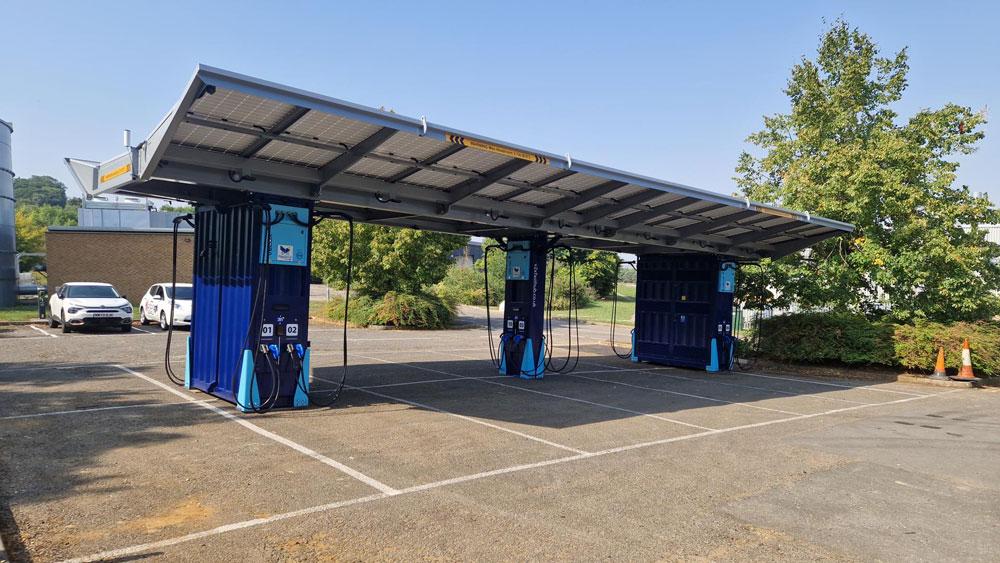
For fleets looking to install depot charging, smart connection solutions, including flexible connections and profiled connections, can keep costs down, speed up delivery and make better use of available network capacity. UK Power Networks explains further
As fleets accelerate the shift to electric vehicles, access to the right grid connection is becoming just as important as the vehicles themselves. Before Ofgem introduced access and forward-looking charging reforms in 2023, customers could pay for both their connection and wider reinforcement needed on the network. Under the new shallower charging model, customers pay the cost of their connection, while reinforcement on shared network assets is non-chargeable to the connecting customer. UK Power Networks estimates that only around 10 per cent of connections require distribution network reinforcement. This means most customers can connect without wider reinforcement, although the final cost can still vary depending on the site location, distance from the existing network and the size of the asset being connected.
UK Power Networks explains how different smart connection solutions, including flexible connections and profiled connections, can provide further options to keep costs down, speed up delivery and make better use of available network capacity.
Fleet electrification
For many businesses, electrifying a fleet is no longer a distant ambition. It is becoming a practical operational priority, driven by net zero targets, customer expectations, clean air policies and the availability of new electric vans, trucks, buses and cars. But turning that ambition into action depends on more than vehicle choice.
Fleet operators also need confidence that their sites can access the electricity capacity needed to charge vehicles reliably, affordably, and in line with operational deadlines.
Installing depot charging or high-power public charging is not simply a case of putting chargers in the ground. Operators need to understand how much capacity is available, what reinforcement may be needed, how long a connection could take and whether there are smarter ways to make better use of the existing electricity network.
That is where smarter connection options are becoming increasingly important. Ofgem’s 2023 network access reforms introduced a more streamlined approach to connecting to the network and changed how connection charges are calculated. Through the shallow charging model, reinforcement on shared network assets is no longer charged directly to the connecting customer, helping reduce the contribution many customers make towards wider reinforcement. Smart connection options build on that progress by giving customers more choice where location, asset size or the length of connection required could still affect cost and timescales.
For fleet operators, flexible connections can use smart systems to monitor and manage electricity use in real time, so customers can connect sooner while agreeing to reduce demand or generation during periods of network constraint. Profiled connections can also help by matching a customer’s agreed import or export profile to the times when the local network has capacity available.
Together, these options are not a substitute for network investment, but an additional route that can reduce the need to wait for traditional reinforcement, lower upfront costs and make more efficient use of existing network capacity.
What has changed?
UK Power Networks has launched a major upgrade to the way customers connected through Independent Distribution Network Operators (IDNOs) can access flexible connections. For the first time, IDNO customers can now benefit from UK Power Networks’ Distributed Energy Resources Management System, known as DERMS.
An IDNO owns and operates local electricity networks, often serving new developments, commercial sites and infrastructure projects. Until now, customers connecting through an IDNO could not access the same smart connection options available directly through UK Power Networks’ own network. The new process changes that, opening up a route for more customers to connect low-carbon technologies through solutions that are smarter and more responsive to real-time network conditions.
How does DERMS work?
DERMS is part of UK Power Networks’ smart grid. It gives the company a real-time view of connected assets such as solar farms, batteries and electric vehicle charging hubs, and allows the network to be managed more actively.
In practical terms, if there is no network capacity to enable the full unconstrained capacity of a connection request, the site may be offered a flexible connection. Once it connects, if the network is operating within its limits, the site can continue to operate as normal. If there is a constraint, the site will receive an instruction to turn down demand or generation in line with the customer’s agreed connection terms.
This type of flexible arrangement can be particularly useful where a site needs a large connection, but the local network does not have enough firm capacity available all of the time. Rather than waiting for reinforcement before connecting, a customer may be able to operate sooner, with agreed conditions around how the connection is managed during periods of network constraint.
Why does this matter for fleet operators?
Fleet electrification puts new demands on depot sites. A depot that previously needed electricity mainly for buildings, lighting or equipment may suddenly need enough capacity to charge dozens of vehicles overnight, support rapid daytime turnaround, or power larger commercial vehicles with higher energy requirements.
For some fleets, grid connection uncertainty can become one of the biggest barriers to electrification. Operators need to know whether their depot can support their charging plans, what it will cost, and whether the connection timeline aligns with vehicle procurement, funding deadlines and operational commitments.
The new IDNO DERMS process could help by giving eligible customers another option. Where a traditional firm connection would require costly or time-consuming reinforcement, a flexible connection may allow the site to connect earlier by agreeing to operate within flexible limits at certain times. In other cases, a profiled connection may be suitable where a customer’s charging pattern can be matched to periods when the network has capacity available.
Helping to solve connection challenges
Large EV charging projects often face similar challenges. The site may be in the right location for drivers or fleet operations, but the local network may not have enough spare capacity for a fully firm connection in the timescale required. Reinforcement can add cost and delay.
Customers may also struggle to understand what capacity they actually need, especially if their charging load will vary by time of day, vehicle type or operational pattern.
Smart connection options help address this by matching the connection more closely to how the site will operate in practice. A depot may have predictable charging windows that suit a profiled connection, while a public charging hub may need the real-time management offered by a flexible connection to respond to changing demand. With the right data and control arrangements, the network can support more customers by making better use of existing infrastructure.
For customers, the process is intended to create more choices. A firm connection may still be the right option for some sites. But for others, a flexible or profiled connection could provide a practical route to connect sooner, reduce upfront reinforcement requirements and start delivering benefits more quickly.
A real-world example
The first example is GRIDSERVE’s EV charging hub at Extra Motorway Services, Cobham, the busiest motorway service station in the UK, connected through ESP Utilities Group. It is the first fully flexible demand customer connecting to an IDNO network through this process.
The project demonstrates that flexible connections are not only relevant to sites that export electricity, such as solar farms or batteries. They can also support customers with high electricity demand, including EV charging hubs, by helping them access the electricity they need without always waiting for conventional reinforcement.
Daniel Saker, head of network strategy at UK Power Networks Distribution System Operator, said: “This is a landmark moment as we bring a new connection offering to IDNO customers. By enabling smarter, more flexible connections, we’re helping businesses and communities get their low-carbon projects online faster and more efficiently.”
For fleet operators, the message is loud and clear: grid connection planning should be part of fleet electrification from the start. The right connection strategy can influence timelines, cost, site selection and charging design. By opening smarter connection options to IDNO customers, including flexible and profiled approaches where appropriate, UK Power Networks is helping more businesses explore practical routes to electrification and making it easier for charging infrastructure to keep pace with the transition to electric transport.