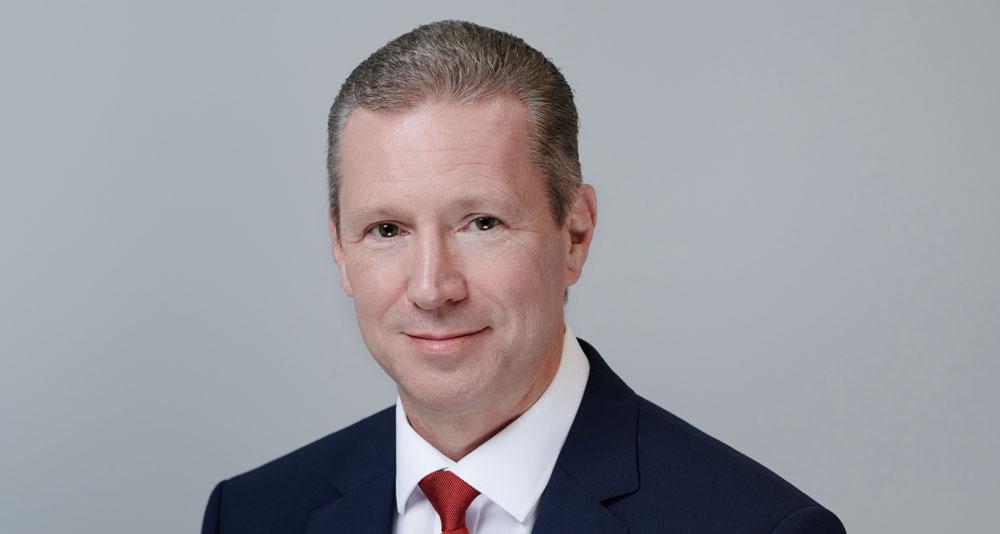
Ben Fletcher took over as chief executive at business group Logistics UK at the end of the last year. Now, after nine months in the role, we sat down with him to discover his initial impressions of the logistics industry, his ambitions for the organisation and the industry at large, and what lies ahead in the future for the sector
You’ve held senior leadership roles across government, major public bodies and Make UK. What attracted you to the logistics sector?
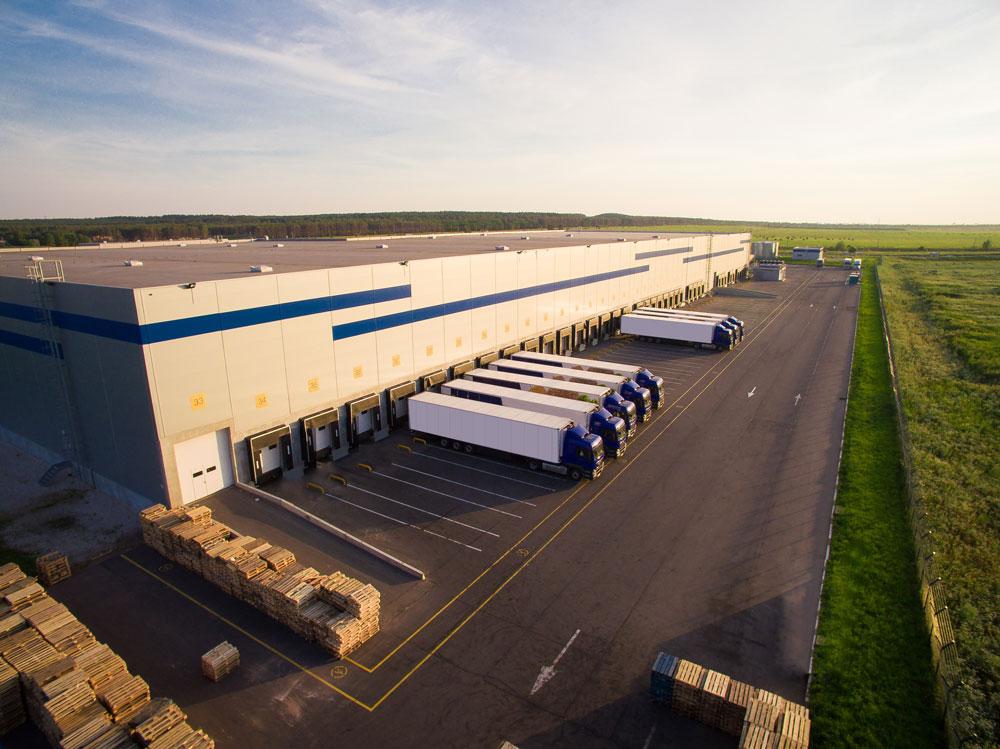
What really attracted me to logistics is that it sits at the heart of almost everything the UK does. You cannot build homes, run hospitals, stock shops, export goods or deliver public services without an effective logistics network. It is the backbone of the UK economy, keeping supply chains moving while contributing £175 billion each year to the public purse. But outside the sector itself, awareness and understanding of the integral role it plays remains low. No one considers how goods arrive in the right place at the right time, but to do so involves a vast network of organisations and individuals working seamlessly to deliver for the economy.
My first real exposure to the sophistication of the sector came when I was at the Home Office and spent four years working on the security programme for the 2012 London Olympics. I was responsible for coordinating more than 50 organisations across the Olympic Park and during the construction phase, we were working with suppliers of all sizes and had to make sure that all loads coming into the park were pre-vetted, or sometimes searched, to make sure they met the strict security requirements. It was a highly complex, multi-layered operation which gave me a real insight into how logistics enables events of this size and scale to take place.
After that, my work with manufacturing trade body Make UK reinforced the point that logistics is indispensable to British industry. It became very clear to me that you can have the best factory in the world, with the most skilled staff and best product on the market, but if you can’t get your raw materials in and your finished product out, you will not be in business for very long.
And it was the opportunity to make policy makers aware of these experiences and champion a sector that is central to the UK’s economic future that really attracted me to joining Logistics UK.
What were your priorities when you became chief executive of Logistics UK? How have the first nine months in post been?
My first priority has been to get out there and start meeting members. Our membership is the beating heart of logistics, and these meetings were a vital chance to learn more about the challenges operators are facing, but also feel their energy and enthusiasm working for the sector. Logistics UK represents the whole industry, so it is essential that our advocacy reflects the operational realities of businesses of all sizes and across all modes.
My second priority was to start raising the profile of logistics among the nation’s policy makers and make sure Westminster understands that if logistics thrives, then so does the economy. Logistics needs to be recognised as a strategic enabler of economic growth, industrial strategy, regional development and meeting net zero goals, and not just seen as a background function.
It was therefore significant that Department for Transport Minister Keir Mather was appointed Minister for Maritime, Aviation and Logistics in the latest round of ministerial appointments made in August. Logistics UK has been urging government to appoint a specialist logistics minister for some time, and the expansion of Mr Mather’s role demonstrates the government is listening to the industry and appreciates the critical role that logistics can play in the rejuvenation of the UK’s economy.
Decarbonisation is one of the biggest challenges facing logistics. What has gone well and what are the biggest barriers that still need to be overcome?
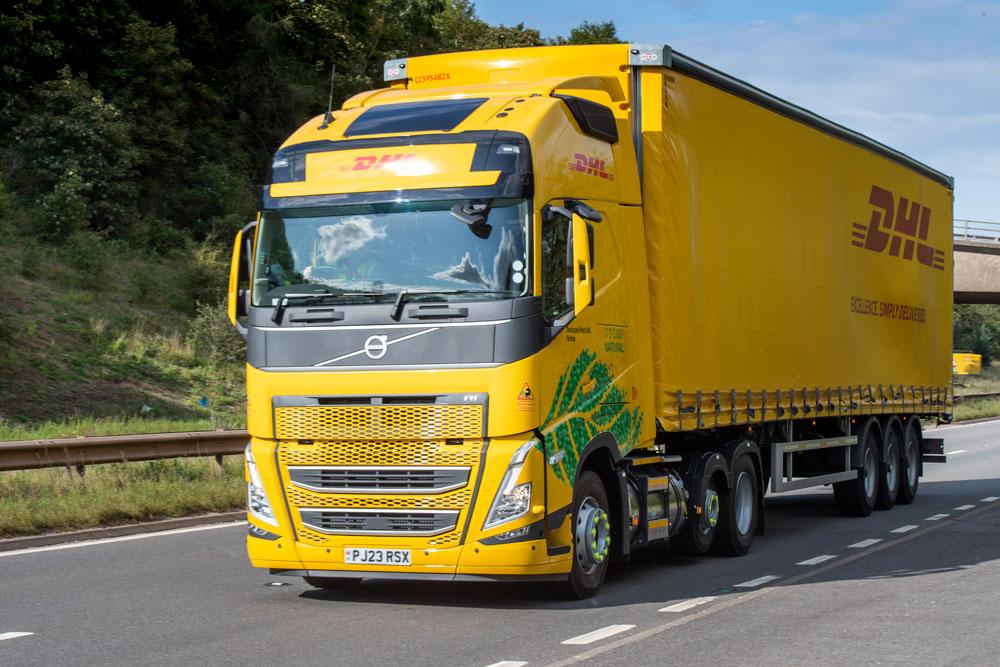
The positive news is that the sector is not waiting to be persuaded to decarbonise and logistics businesses are already investing and innovating to make a low carbon future a reality. This year we have seen major EV charging hubs opening in strategic locations such as the East Midlands and Tilbury, and for the first time, electric HGVs have travelled through the Channel Tunnel into continental Europe.
The adoption of these solutions can be costly, and as the sector is one that operates on narrow profit margins, it is vital that operators are supported throughout the transition. The provision of funding such as the Plug-in Van and Truck Grant and the ZEHID programme are examples of successful initiatives that have helped lower the barrier to entry and given operators the confidence to invest in new technologies.
However, the adoption of electric fleets requires more than just affordable vehicles and before operators can make the switch, they need to be confident the new technology will be operationally viable. In addition to high upfront vehicle costs, limited public charging and refuelling infrastructure and delays to grid connections all remain major obstacles to making the switch. This is why we need practical systems that allow businesses to make the transition without undermining service reliability or driving unnecessary cost into the wider economy.
With members spanning road, rail, air, water and freight users, Logistics UK represents the entire supply chain. What sub-sector faces the biggest decarbonisation challenge?
Every mode faces its own challenge, and we need to avoid treating decarbonisation as a series of disconnected silos. The whole logistics system is interdependent, so policy on electricity networks, low carbon fuels, planning, skills and infrastructure needs to be designed as part of one coherent system. For some time, Logistics UK has argued that successful logistics decarbonisation depends on a coordinated, whole-systems approach rather than isolated action or siloed policymaking.
That said, road freight faces some of the most immediate and visible challenges because of its scale, its operational diversity and the speed at which policy deadlines are approaching, as well as the nation’s reliance on the goods which road freight delivers. Vans and HGVs serve every part of the country, often with demanding payload, range and uptime requirements. For lighter vehicles, electrification is progressing, but for heavier and long-distance operations the technology, infrastructure and cost equation is more complex as well as the initial cost outlay, which can be significant.
The challenge is especially acute for smaller operators, who form the backbone of the industry but often have less capital, less depot space and less ability to absorb uncertainty. If we want road freight to decarbonise successfully, we need a truly technology-neutral approach that considers all viable pathways, including low carbon fuels and other solutions.
What would be your key asks for the new Prime Minister to help accelerate decarbonisation in the logistics sector?
The sector is fully committed to decarbonisation and has been investing in the adoption of new technologies to reduce carbon emissions for some time, while continuing to deliver for the economy. We now need clear signalling from the government that it is serious about the transition and are urging it to develop a co-owned industry and cross-government decarbonisation roadmap.
Such a roadmap would support coordinated investment and improved accountability across the system, providing the long-term certainty the sector needs to decarbonise. Electrification will be central to decarbonising logistics, but it cannot succeed in isolation. Low carbon fuel will play a vital bridging role in reducing emissions from heavier and hard-to electrify vehicles until zero-tailpipe emission alternatives are considered more commercially viable.
There is also a stark need for more investment in grid capacity, faster and more affordable connections, and fairer electricity pricing if operators are to have the confidence to electrify their fleets at scale and pace.