Workplace or depot charging can be a significant investment, so getting it right is essential. But what do fleet operators need to consider to avoid over-investing in infrastructure while ensuring vehicles have the energy they need to get the job done?
Charging is one of the most important considerations when planning an electric fleet. It can be a significant expense, so planning is crucial. Before investing in vehicles or infrastructure, operators need to understand where vehicles will charge, when they will need to charge and how much energy they will require.
The right solution will depend on vehicle range, daily mileage, operating patterns and the amount of time vehicles spend parked.
Understanding these requirements at the outset will help fleet operators avoid over-investing in charging infrastructure while ensuring vehicles have the energy they need to complete their work.
Start with the power available
Where workplace or depot charging is required, one of the first questions to answer is whether the site has enough electrical capacity.
Operators should establish the size of their agreed supply capacity with their Distribution Network Operator (DNO), how much electricity the site currently uses and, crucially, how much spare capacity is available for EV charging. This assessment needs to consider the site’s existing electricity demand as well as the additional demand created by the vehicles.
The objective is to ensure that charging can take place without exceeding the site’s available capacity or creating problems with other operations.
If there is insufficient capacity, a grid connection upgrade may be possible through the DNO. However, this can be an expensive and lengthy process, particularly where significant network reinforcement is required. For fleets working to tight electrification timescales, waiting for additional grid capacity may not be an attractive option, with the SMMT stating it can take up to 15 years.
There are alternatives, however, and these should be investigated before committing to an expensive connection upgrade.
Making better use of available power
Load balancing and smart charging systems can help sites make better use of the electricity they already have. Rather than allowing every charger to draw its maximum available power simultaneously, these systems monitor the site’s energy consumption in real time and adjust the power available to EV chargers according to demand.
For example, if a building’s electricity demand increases, the charging system can reduce the power being delivered to vehicles. When demand elsewhere on the site falls, more power can be made available for charging.
This approach can be particularly effective for fleets where vehicles are parked for several hours.
An example of this is UPS. The company wanted to increase its London-based electric fleet from 65 to 170 commercial delivery vans. However, the local grid network could not supply the necessary power without a multi-million-pound substation upgrade that would take years to complete.
UPS collaborated with UK Power Networks Services, Cross River Partnership, and Innovate UK to build an intelligent smart-grid charging hub, and instead of charging all vans concurrently at maximum speed, an automated energy management system spreads the charging load across the entire evening. It tracks the collective depot draw and caps total power ingestion to stay below the grid’s maximum limit.
On-site energy generation and storage can provide another way of managing power constraints. Solar generation can provide electricity directly to vehicles, while battery energy storage systems can store energy for use when demand is higher or electricity from the grid is more expensive.
The importance of the site survey
A detailed site survey should be an essential part of any workplace or depot charging project. It will help establish what is technically possible and identify potential challenges before installation begins.
Engineers will typically assess the site’s existing electrical infrastructure, available power, proposed charger locations, cable routes and the potential requirement for groundworks. The survey should also consider how vehicles move around the site and whether chargers can be positioned without disrupting day-to-day operations.
Planning for future growth is important too. A fleet may initially require only a handful of chargepoints, but if the intention is to electrify more vehicles over time, it can make sense to consider future cabling, electrical capacity and charger locations during the initial project.
Property ownership is another issue that should be addressed early. If the fleet operates from a leased or rented site, the operator will need the landlord’s consent to install charging infrastructure. This can involve legal agreements and negotiations, so it is worth starting the conversation as soon as possible.
Where workplace chargepoints will also be available to members of the public outside fleet use, operators will need to consider the requirements of the Public Charge Point Regulations 2023.
Choosing the right charging speed
Charging speed is another important consideration, but faster is not necessarily better.
Fast chargers typically operate at around 7kW to 25kW and can be suitable where vehicles are parked for long periods, such as overnight or throughout the working day. For many depot-based fleets, this can provide all the charging capability required.
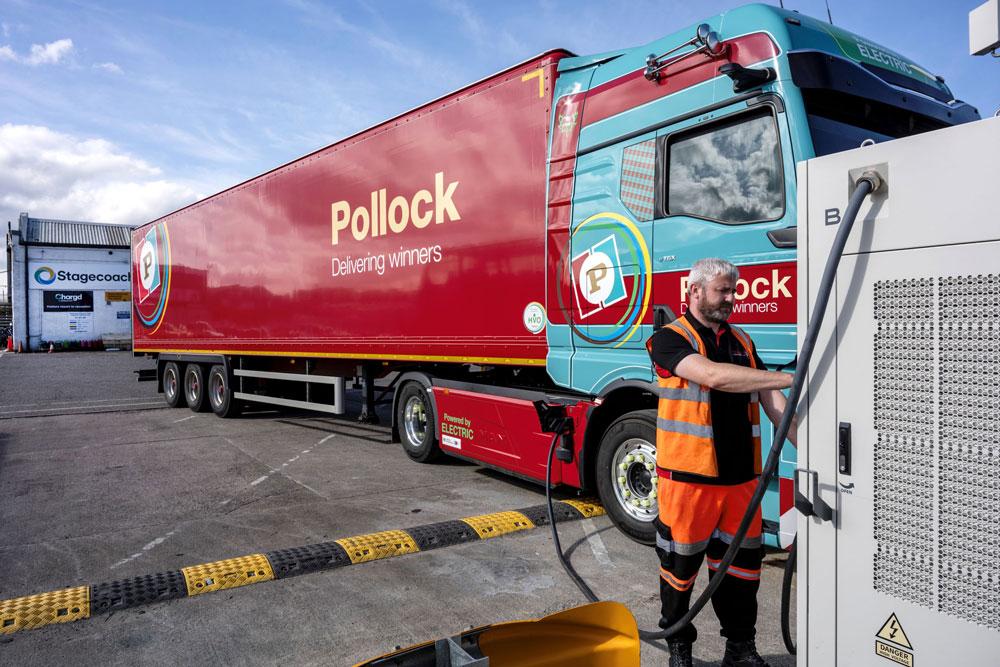
Rapid charging, generally around 50kW to 100kW, is more suited to operations where vehicles need a quicker turnaround. Ultra-rapid chargers of 150kW and above can provide even faster charging and are particularly relevant to public charging hubs, short-stay destinations and some electric HGV applications.
The optimum solution will depend on how the fleet operates. Installing high-powered chargers across a depot may sound attractive, but if vehicles spend eight or ten hours parked there, the additional cost and power requirement may deliver little practical benefit.
AC or DC?
Fleet operators will also need to understand the difference between AC and DC charging.
AC chargepoints take alternating current from the grid and supply it to the vehicle, where the vehicle’s onboard charger converts it into DC electricity for the battery. Typical AC charging rates are 7kW, 11kW and 22kW, although relatively few vehicles can make full use of 22kW AC charging.
With DC charging, the power conversion takes place within the chargepoint itself. Because the equipment can contain much larger power converters than those found inside the vehicle, DC chargers can deliver considerably higher charging rates and therefore charge vehicles more quickly.
The choice between AC and DC should again be driven by the operation. A depot where vehicles are parked overnight may not need DC charging, whereas a vehicle that needs to return to service quickly could benefit from it.
Look beyond the hardware
Choosing a chargepoint installer is not simply about the physical equipment. Operators should also examine the software and support services that sit behind it.
A good back-office platform should provide visibility of charging activity, including charging times, energy consumption, charging speeds and costs. For businesses with sustainability targets, the ability to generate emissions and carbon-saving reports can also be valuable.
Fleet operators should also ask what happens when something goes wrong. The availability of maintenance and support, response times, repair arrangements and callout costs can all have a significant impact on the long-term value of the charging installation.
Public charging has a role to play
The UK’s public charging network has expanded significantly, with particularly strong growth in ultra-rapid charging. For fleets that need to charge away from base, there is therefore an increasing range of options, supported by apps and digital services that can help drivers locate available chargepoints and check their status.
However, public charging is generally more expensive than charging at a depot or at home, particularly when using rapid and ultra-rapid infrastructure. Fleet operators should therefore understand how much public charging their vehicles are likely to require and factor the cost into their total cost of ownership calculations.
Chargecards can simplify the process. A driver can use a single card or account across multiple charging networks, while the fleet manager receives consolidated billing and charging data. Depending on the provider, this can include information about charging habits, costs and carbon savings. Many providers also offer discounted charging rates.
Is home charging possible?
For company cars and vans that are taken home by employees, it is worth understanding if they would be able to install a charge point for cheaper home charging.
If so, the business should discuss the installation process with the employee, including where the chargepoint will be located, who owns and maintains the equipment and what happens if the employee moves home or leaves the company.
Reimbursement also needs to be agreed in advance. Home charging can be an economical option, particularly where drivers can access favourable EV-specific electricity tariffs, but fleet managers need a reliable way to record the electricity used for business journeys and reimburse drivers appropriately.
Get government support while it lasts
The Government’s Workplace Charging Scheme provides financial support towards eligible workplace chargepoint installations and has been extended to March 2027. Operators should check the latest eligibility criteria and grant levels when planning their projects.