Empty miles, congested roads and rising energy costs have long challenged the freight sector. Today, new technology such as AI, automation, energy management systems and digital twins is helping fleet operators move goods more efficiently and accelerate decarbonisation
From artificial intelligence and automation to digital twins and smart energy systems, innovations in technology are helping freight operators maximise capacity, reduce costs, improve resilience and accelerate decarbonisation.
One major area that technology can help tackle is the number of vehicles travelling with unused capacity or returning empty after deliveries. Advanced digital tools are helping operators tackle this challenge by matching freight with available capacity in real time.
Digital freight matching platforms use cloud-based marketplaces and AI-powered algorithms to connect carriers with suitable return loads, reducing empty miles and improving fleet productivity.
Artificial intelligence is also enhancing route planning. Modern transport management systems can analyse live traffic conditions, weather patterns, delivery schedules and vehicle availability to optimise routes dynamically. Multi-drop planning software ensures vehicles follow the most efficient delivery sequence, while automated re-routing helps fleets avoid delays and minimise fuel consumption.
Meanwhile, telematics and Internet of Things (IoT) sensors provide real-time visibility of vehicle capacity and performance. Fleet managers can monitor trailer utilisation, identify underused assets and automatically dispatch vehicles to available loads, improving operational efficiency while reducing emissions.
Technology is also enabling greater collaboration across the industry. Shared logistics networks allow multiple shippers to consolidate less-than-truckload (LTL) shipments into fully utilised vehicles, while trailer pooling and “drop-and-hook” systems minimise vehicle idle time by allowing drivers to exchange trailers quickly rather than waiting for loading and unloading operations.
Enabling modal shift
Moving freight from road to lower-carbon transport modes such as rail and inland waterways has long been recognised as a key decarbonisation opportunity. Historically, however, intermodal transport has been constrained by complexity, poor visibility and coordination challenges.
New digital technologies are helping overcome these barriers, such as platforms that use real-time data to dynamically select the most efficient combination of road, rail and water transport based on changing conditions such as congestion, weather and terminal capacity. Freight operators can compare transit times, costs and carbon impacts across multiple transport modes, allowing more informed decision-making.
Rail freight is also becoming more efficient through digitisation. Digital Automatic Couplers (DAC) automate the physical and data connections between rail wagons, significantly reducing train assembly times while creating connected “digital freight trains” capable of sharing operational data in real time.
DP World has invested in expanding direct rail freight services. Through its Modal Shift Programme, it provides financial incentives for cargo owners to move containers by train rather than road, drastically cutting supply chain emissions. From launch in September 2023 to December 2025, it has transferred 13 million road miles to rail.
Ports and terminals are increasingly adopting automation and smart operating systems that coordinate cranes, trucks, trains and storage yards.
Technologies such as optical character recognition (OCR), automated gate systems and just-in-time arrival management reduce congestion, improve asset utilisation and speed up the transfer of cargo between transport modes.
Creating smart energy hubs
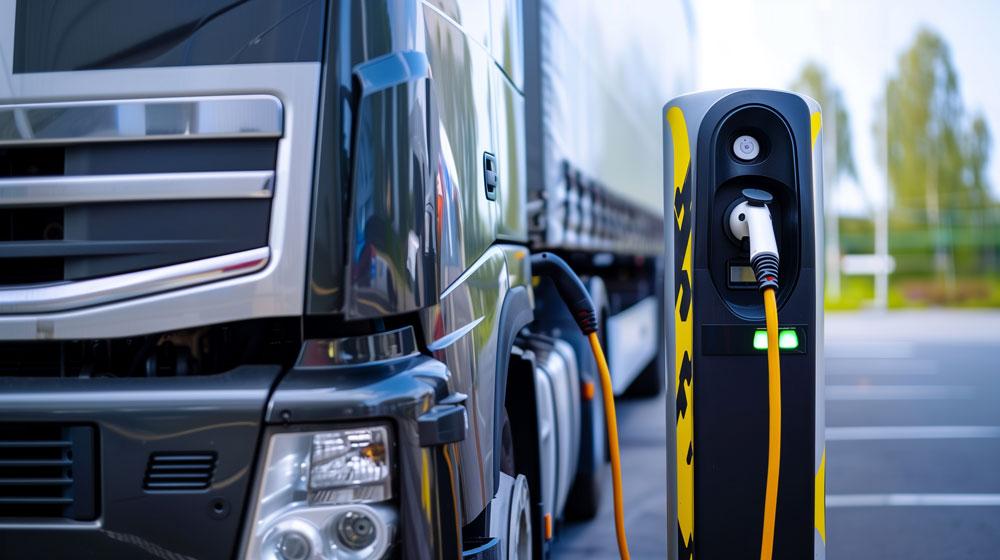
With the growing adoption of electric heavy goods vehicles, the power needs for organisations are rising.
But there is a growing trend for warehouses to evolve from energy consumers into active energy producers and managers.
Advances in renewable energy, battery storage and intelligent energy management systems are allowing logistics facilities to reduce costs, improve resilience and support grid decarbonisation.
Smart meters and wireless sensors provide detailed insights into energy consumption across warehouse operations, identifying inefficiencies in lighting, heating, automation systems and machinery. This data enables operators to optimise energy use and reduce waste.
Large warehouse roofs are increasingly being utilised for solar photovoltaic generation, while battery storage systems capture excess renewable energy for use during periods of peak demand or low generation. This reduces reliance on the grid and improves energy security.
AI-driven Energy Management Systems (EMS) bring these technologies together by analysing weather forecasts, operational schedules and electricity market conditions. The software can automatically determine when to consume, store or export energy, transforming warehouses into intelligent, flexible energy assets that support both business operations and wider grid stability.
Building digital twins of freight networks
Digital twins are emerging as one of the most powerful tools available to logistics operators. By creating virtual replicas of physical assets, vehicles, warehouses and supply chains, organisations can simulate, analyse and optimise operations before implementing changes in the real world.
Digital twins combine data from sensors, telematics systems and operational platforms to create dynamic models that reflect current conditions. Operators can test different routing strategies, warehouse layouts or fleet deployment plans to identify the most efficient and cost-effective outcomes.
The technology also enables predictive maintenance by continuously monitoring asset performance and identifying signs of wear before failures occur. This helps reduce downtime, extend equipment life and lower maintenance costs.
Within warehouses, digital twins allow operators to model inventory flows, optimise storage layouts and improve automation performance. Across supply chains, they provide enhanced visibility and resilience by simulating disruptions such as port congestion, extreme weather or geopolitical events.
Digital twins are also becoming valuable tools for sustainability planning. Companies can model the environmental impact of different transport modes, evaluate the benefits of electrification and identify the most effective pathways to reducing carbon emissions.
Maersk, for example, uses AI-powered digital twins to simulate, monitor, and optimise its global supply chain. By creating virtual replicas of physical assets, such as vessels, warehouses, and port terminals, Maersk can safely test “what if” scenarios, predict disruptions, and make data-driven decisions before implementing changes in the real world.
Accelerating automation and AI adoption
Automation is transforming freight operations by reducing manual processes and creating highly coordinated logistics ecosystems powered by artificial intelligence.
In warehouses, autonomous mobile robots (AMRs) can move goods independently across facilities, transporting pallets and inventory while working safely alongside employees. Automated storage and retrieval systems increase storage density and improve picking efficiency by bringing products directly to workers.
Computer vision and AI-powered robotic arms are becoming increasingly capable of identifying, sorting and packing items with minimal human intervention. Machine learning algorithms can determine the most efficient way to stack and load goods, maximising trailer utilisation and reducing handling times.
Artificial intelligence also acts as the coordination layer across these automated systems. Advanced fleet and warehouse management platforms analyse vast amounts of operational data in real time, optimising workflows, directing robotic movements and continuously improving performance.
The result is a freight sector that is faster, more resilient and increasingly data-driven. As digital technologies continue to mature, the integration of AI, automation, digital twins and smart infrastructure will play a central role in delivering the efficient, low-carbon freight networks needed to support future economic growth.