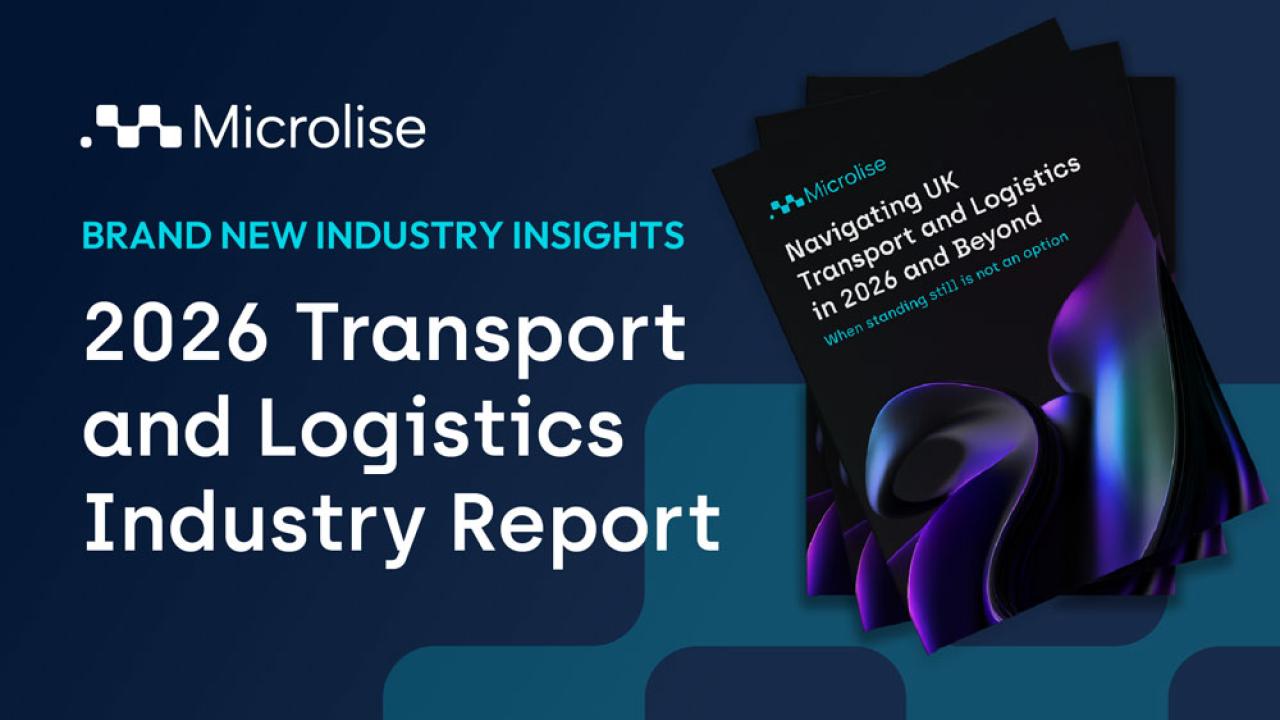
According to Microlise's second annual transport and logistics industry report, sustainability has risen sharply up the business agenda. Six in 10 respondents now describe environmental impact as a top priority for their organisation, compared with 36% in Microlise's 2025 report.
Based on responses from 250 transport and logistics professionals across the UK, the report explores the trends shaping fleet operations in 2026, revealing how operators are embracing innovation to improve safety, efficiency and performance while continuing to navigate increasingly complex commercial and regulatory demands.
Positively, nine in 10 transport and logistics managers say advances in fleet and driver management technology have helped drivers feel safer than they did five years ago.
More than half of respondents said technologies such as in-cab cameras had improved driver performance by up to 50%, while 83% reported that camera systems had helped prevent a serious accident involving one of their drivers.
The research also points to growing confidence in emerging technologies. More than eight in 10 transport and logistics managers now use AI tools to support fleet and supply chain operations, while 88% believe their organisations are well equipped to maximise the technology's potential in the future.
The report also highlights the commercial value technology can deliver, with almost 60% of respondents reporting savings of up to £100,000 through the use of transport management systems.
However, the findings suggest there is still significant scope to improve efficiency across the sector. Transport and logistics managers reported spending an average of 2.3 hours each day manually processing proof of delivery documentation, up from 1.7 hours in 2025. The average daily cost associated with manual proof of delivery processing has also risen year-on-year to £172.40.
Alongside operational challenges, the research highlights ongoing workforce pressures. More than half of respondents said that while they enjoy working in transport and logistics, they would consider moving into a different career within the next five years, underlining the importance of attracting, retaining and supporting talent across the industry.
The report also shines a light on the pace of change that technology manufacturers must keep with operators, which are placing greater emphases on the need for automation, AI, real-time visibility and integrated data flow in fleet management tools. Microlise is focused on developing technology that enables information to move more seamlessly across operations, supporting faster and more informed decision-making and providing a clear, end-to-end view of performance across the entire transport function.
The company’s approach to AI is to embed intelligence within everyday tools rather than treat an all-encompassing AI as a standalone feature. Its strengthening of data connection, interpretation and application in fleet operations enables richer insight, automated workflows and more proactivity.
Microlise One Analytics harnesses more than 40 years of experience and innovation and is designed to improve operational performance, efficiency, safety, compliance, sustainability and profitability. As customer requirements continue to change, this direction is central to the company’s product roadmap and Microlise One’s vision of a fleet technology offering that brings together all these factors in one single, intelligent and connected interface.
Commenting on the report’s findings, Microlise CEO Nadeem Raza said: "The findings demonstrate the positive impact technology is having across safety, sustainability and operational efficiency, while also highlighting areas where challenges remain and further progress can be made.
"As the pace of change continues to accelerate, understanding these trends will be critical in helping operators make informed decisions, improve resilience and build future-ready businesses."