With the Automated Vehicles Act creating a pathway from trials to commercial deployment, and autonomous taxi services expected on UK roads later this year, Voltempo’s Michael Boxwell explains why autonomous HGVs could be closer than many think
If autonomous taxi services are set to become a reality on UK roads, could autonomous HGVs be far behind?
According to a new report from the eFREIGHT Autonomous consortium, the UK now has a clear pathway to become one of the world’s leading autonomous freight markets.
Led by Voltempo alongside Connected Places Catapult and autonomous vehicle design specialist Berkeley Coachworks, the study concludes that autonomous freight is moving from research and demonstration projects into early commercial deployment internationally, while the UK’s combination of legislation, logistics expertise and innovation capability creates the conditions for early deployment.
“We’ve focused on understanding where autonomous freight can deliver genuine operational value for UK fleets and what conditions are needed to make deployment practical,” explains Michael Boxwell, corporate development officer at Voltempo.
“What’s become clear is that this is no longer a future concept. The technology, legislation and commercial interest are all moving forward quickly.”
The report identifies hub-to-hub motorway trunking and intermodal shuttle operations as the most viable starting points for autonomous freight in the UK. More importantly, it concludes that the opportunity extends far beyond the vehicles themselves, encompassing software, safety assurance, systems integration, operations and even the design of an entirely new generation of freight vehicles.
A regulatory head start
For all the attention given to autonomous vehicle developments in the US and China, the report identifies the UK’s regulatory framework as one of its biggest advantages.
The Automated Vehicles Act 2024 provides the legal foundation for self-driving vehicles in Great Britain, establishing how autonomous systems will be authorised and where responsibility sits when the vehicle is operating autonomously.
While further implementation work remains, the report concludes that the UK has established a clear pathway from trialling autonomous vehicles to commercial deployment.
“The UK has taken an important step forward with the Automated Vehicles Act,” says Boxwell. “For businesses considering investment, clarity is critical. Having a framework that provides a route from trials through to commercial deployment gives confidence that autonomous freight can move beyond demonstration projects.”
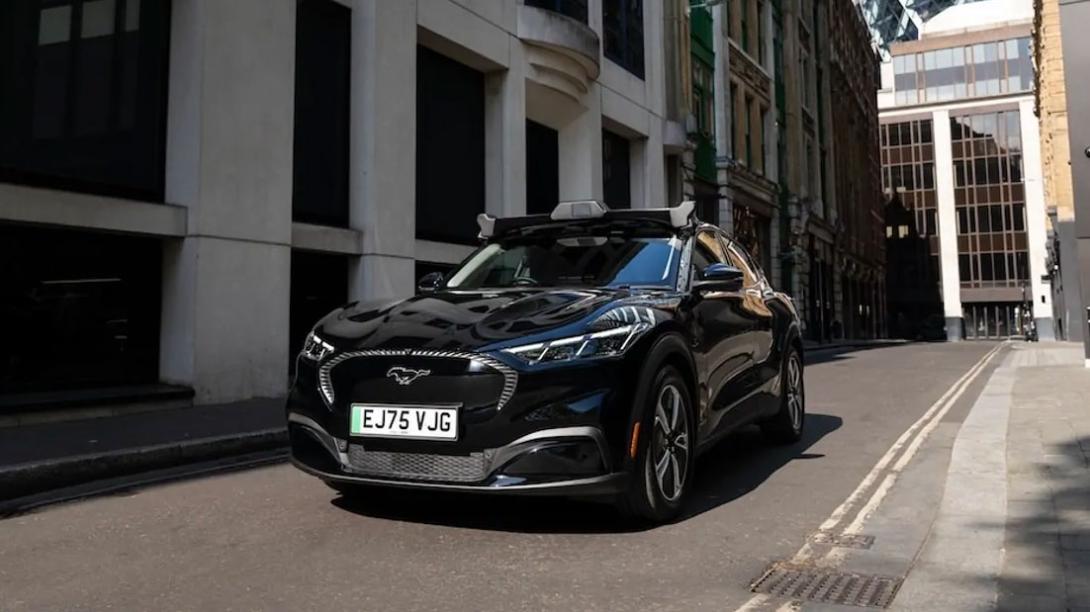
The report notes that forthcoming regulations are expected to allow companies such as Waymo to operate autonomous taxi services in the UK, creating a pathway for the first commercial driverless passenger services on public roads.
For Boxwell, those developments matter because they demonstrate how quickly the
regulatory landscape is evolving.
“We’re moving beyond asking whether autonomous vehicles will happen and starting to focus on where they can deliver value first,” he says.
The report concludes that the UK is well placed to be an early deployment market for autonomous freight and to help shape its development internationally.
Combined with a strong logistics sector, active innovation programmes and involvement in international standards development, the UK has an opportunity to become a leader rather than a follower in autonomous freight.
Why freight?
While autonomous passenger vehicles often dominate public discussion, freight presents a particularly compelling use case.
Heavy goods vehicles underpin the UK’s economy, moving goods between ports, distribution centres, factories and customers. According to the report, road freight accounts for around 81 per cent of domestic freight movements by weight, making it one of the most important parts of the UK’s transport system.
The sector is also facing a combination of challenges that autonomy could help address.
Driver shortages continue to affect recruitment and retention. Operators face rising costs, congestion impacts efficiency and reliability, and fleets are under growing pressure to decarbonise while maintaining service levels.
“Freight operations are often structured, repeatable and highly predictable,” says
Boxwell.
“Vehicles regularly travel between the same locations and interact with controlled logistics environments. That makes freight particularly well suited to early autonomous deployment.”
The report identifies a number of potential benefits, including improved vehicle utilisation, lower operating costs, enhanced road safety, increased supply chain reliability and reduced pressure on driver availability.
Importantly, it does not present autonomy as a replacement for people.
Instead, the study points towards new roles emerging in areas such as remote operations, fleet supervision, safety assurance and systems management as autonomous technologies become more widely adopted.
Starting with the right use cases
A major focus of the study was identifying where autonomous freight could realistically deliver value first.
Following engagement with vehicle manufacturers, fleet operators, ports, technology providers, National Highways and freight customers, two priority use cases emerged.
The first is hub-to-hub trunking between logistics centres using motorways and high-quality A-road corridors.
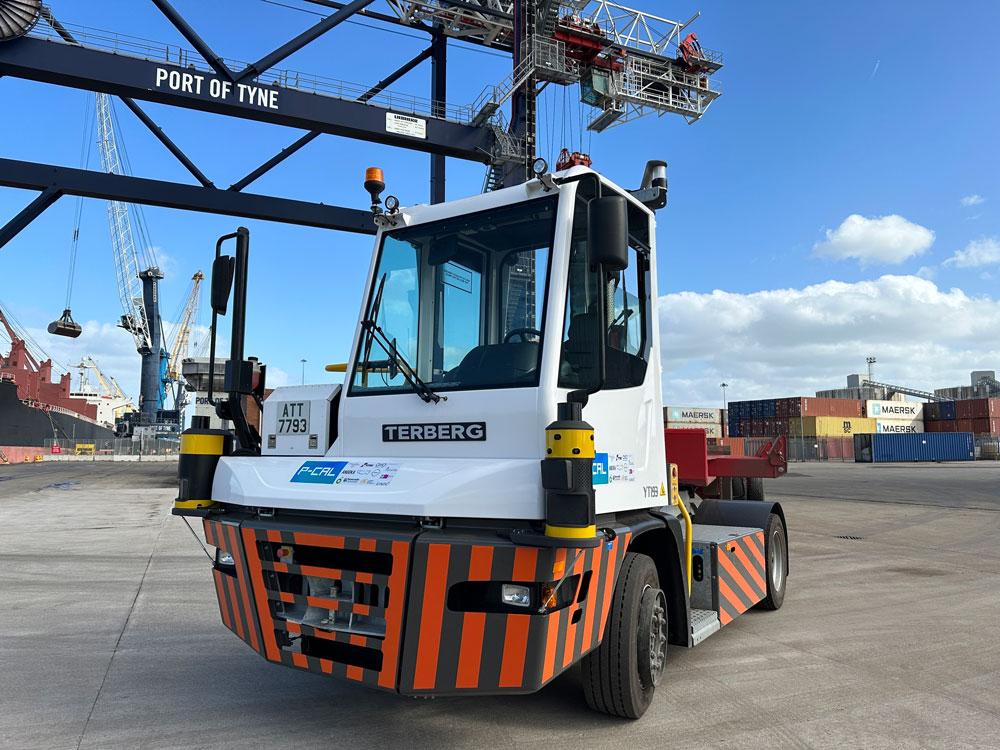
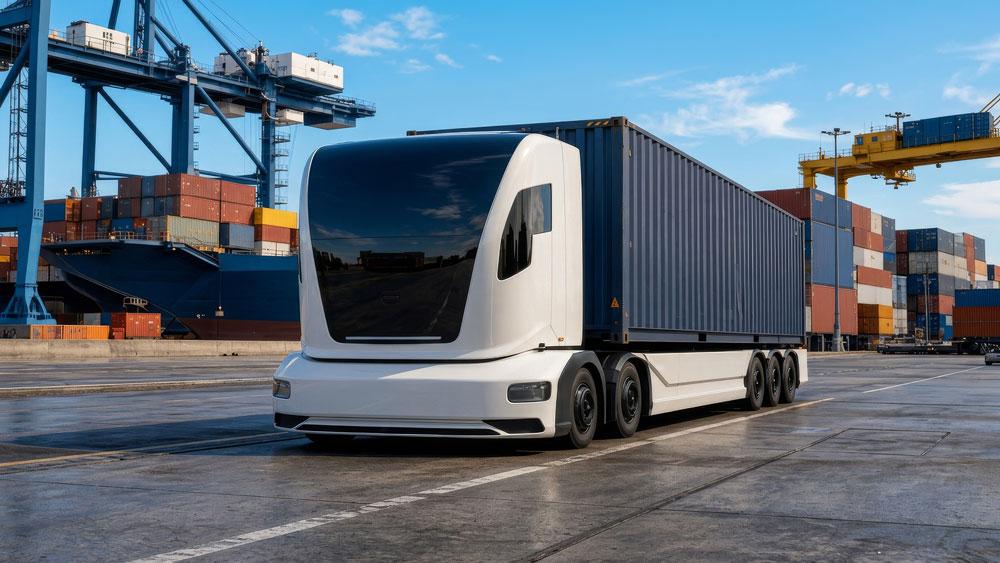
The second is intermodal shuttle operations linking ports, rail terminals, inland freight facilities and nearby distribution hubs.
These use cases were selected because they combine clearly defined operational environments with measurable outcomes around productivity, safety, utilisation and emissions.
“Both applications involve repeatable routes and controlled interfaces,” says Boxwell.
“That allows operators to build experience, generate evidence and demonstrate value before moving into more complex environments.”
Hub-to-hub operations are particularly attractive because they mirror the way freight already moves across the UK’s Strategic Road Network. Intermodal shuttle operations, meanwhile, offer short, frequent and predictable journeys where the benefits of automation can be demonstrated relatively quickly.
The report concludes that more technically demanding applications, such as urban freight operations, are likely to follow later as systems, standards and public confidence mature.
More than a self-driving truck
One of the most important findings from the report is that autonomous freight should not be viewed simply as a vehicle technology. Successful deployment depends on a much broader ecosystem.
Autonomous freight combines onboard sensors, advanced software, localisation systems, mapping technologies and powerful computing platforms capable of understanding their surroundings and making driving decisions. However, the vehicle itself is only one part of the equation.
“People often focus on the truck,” says Boxwell. “But autonomous freight is really an end-to-end operational system. Alongside the vehicle you need remote supervision, software management, maintenance procedures, incident response processes and safety assurance.”
The report highlights the growing importance of digital infrastructure, connectivity, remote operations platforms and operational oversight. It also identifies opportunities for UK businesses in areas such as autonomy software, simulation, safety validation, systems integration and fleet operations.
In many respects, some of the greatest economic opportunities may sit beyond the vehicle itself.
Rethinking freight vehicle design
One of the more distinctive aspects of the eFREIGHT Autonomous project is the involvement of Berkeley Coachworks, which has been exploring how freight vehicles could be redesigned specifically for autonomous operation.
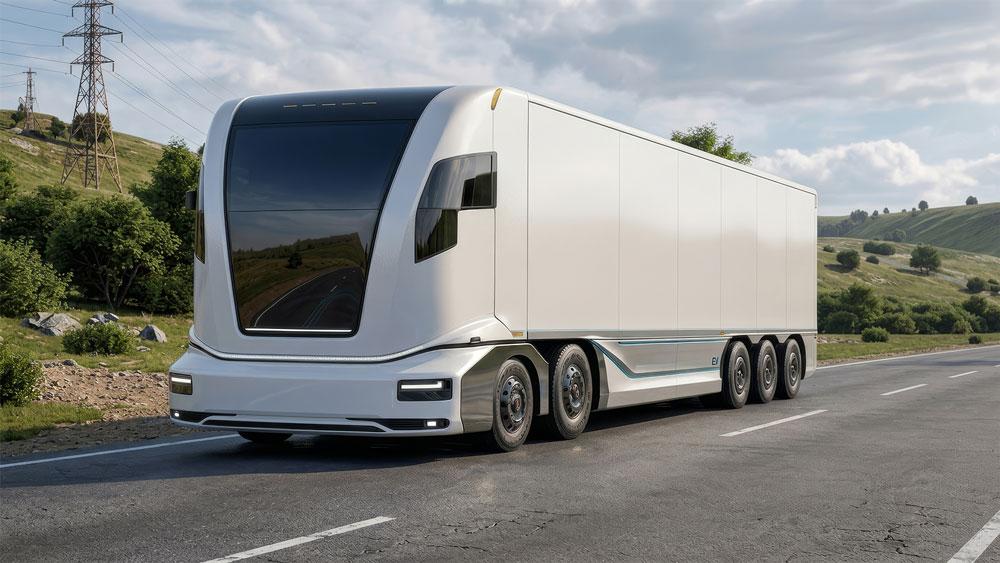
Without the need for a traditional driver cab, entirely new vehicle architectures become possible.
Among the concepts examined is a “smart trailer” configuration capable of carrying more payload while reducing overall vehicle weight and length.
According to the report, such designs could deliver around 15 per cent greater volumetric payload capacity and approximately seven per cent greater weight payload capacity compared with conventional articulated HGVs. That has implications not only for productivity but also for sustainability.
Moving more goods per journey means fewer vehicle movements are needed to transport the same volume of freight.
“It’s important to remember that autonomy creates opportunities beyond simply removing the driver,” says Boxwell. “It gives us the chance to rethink how freight vehicles are designed and how efficiently they move goods.”
The report suggests that vehicle concepts of this type could ultimately contribute to reducing the number of heavy vehicles required on UK roads while improving freight efficiency.
Autonomy and decarbonisation
For GreenFleet readers, one of the most interesting themes emerging from the report is the relationship between autonomous freight and the transition to zero-emission transport.
Although autonomous and electric vehicles are often discussed separately, the study identifies significant synergies between the two technologies. Higher vehicle utilisation is one example. Autonomous operation has the potential to improve the economics of zero-emission HGVs by increasing the amount of productive work each vehicle can undertake.
The report also highlights how smoother, more consistent driving behaviour can help reduce energy consumption, while automated systems could support more efficient operational planning.
Boxwell believes autonomy and decarbonisation will increasingly develop alongside one another.
“Many of the same operators that are looking at autonomous technologies are also looking at electrification,” he says.
“The two are not competing technologies. In many cases they are complementary.”
As the industry works towards the UK’s zero-emission HGV targets, autonomous technologies could help improve efficiency, utilisation and overall fleet performance.
What happens next?
The report’s recommendations are clear. According to Boxwell, the next step should be structured, real-world trials focused on the priority use cases identified through the study.
These trials would generate the operational, economic and safety evidence needed to support future deployment while helping to shape regulatory frameworks, insurance models and operational standards.
For government, the priority is converting the Automated Vehicles Act into a practical deployment pathway. For industry, it means bringing together operators, manufacturers, technology providers, infrastructure owners and insurers to develop scalable operating models.
Autonomous freight is not yet a mainstream reality. But the findings of the eFREIGHT Autonomous report suggest it is no longer a distant prospect.
“The legislation is taking shape, the technology is maturing and commercial interest is growing, Boxwell concludes. “The opportunity now is to ensure the UK does more than adopt autonomous freight technologies developed elsewhere. The real prize is helping shape the future of autonomous freight itself.”