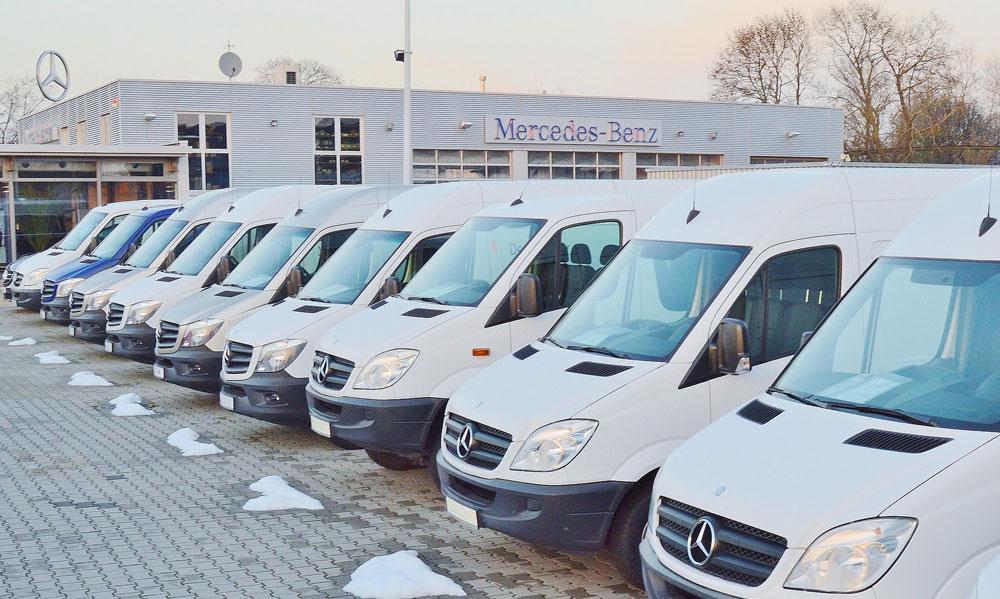
The government has confirmed that electric vans weighing between 3.5 and 4.25 tonnes will be removed from heavy vehicle testing requirements, moving them to Class 7 MOT rules from 1 June 2026.
Electric vans of this size will also require their first MOT three years after registration, not the first year as is currently the case.
The changes also see 3.5-4.25t zero emission vans move into the GB Drivers' hours rules, removing the requirement to use a tachograph and the existing 'distance from base' limit.
Electric vans weighing between 3.5 and 4.25 tonnes were previously treated in-line with HGVs as opposed to their petrol or diesel equivalents.
Aviation, Maritime and Decarbonisation Minister Keir Mather said: "We're backing UK businesses to expand and decarbonise their fleets, and that’s why we’re investing over £1 billion to support businesses to roll out e-vans, trucks and the charging needed to support them.
“This announcement goes even further. As well as saving up to £5,000 off the cost of a new electric van, businesses will now no longer face unnecessary red tape when they make the switch, cutting costs, reducing bureaucracy and driving growth up and down the country.”
Toby Poston, BVRLA Chief Executive added: “Tackling the barriers to large electric van uptake has been a top priority for the BVRLA and our members. Following extensive collaboration between government and industry, these changes remove major operational hurdles for fleets and unlock a critical part of the UK’s transition to zero-emission road transport.”
Logistics UK Chief Executive Ben Fletcher, said: “Electric vans have faced disproportionate regulatory burdens up to now, and been subject to different rules to their conventionally-fuelled counterparts. The new regulations correct the nonsensical situation that saw standard size electric vans treated as HGVs when it came to MOTs, driver hours requirements and mandatory tachograph use, unless they were operated under tight geographical restrictions."
Integrating and operating electric vans will be discussed at length at GREENFLEET North and South. Register for free here.