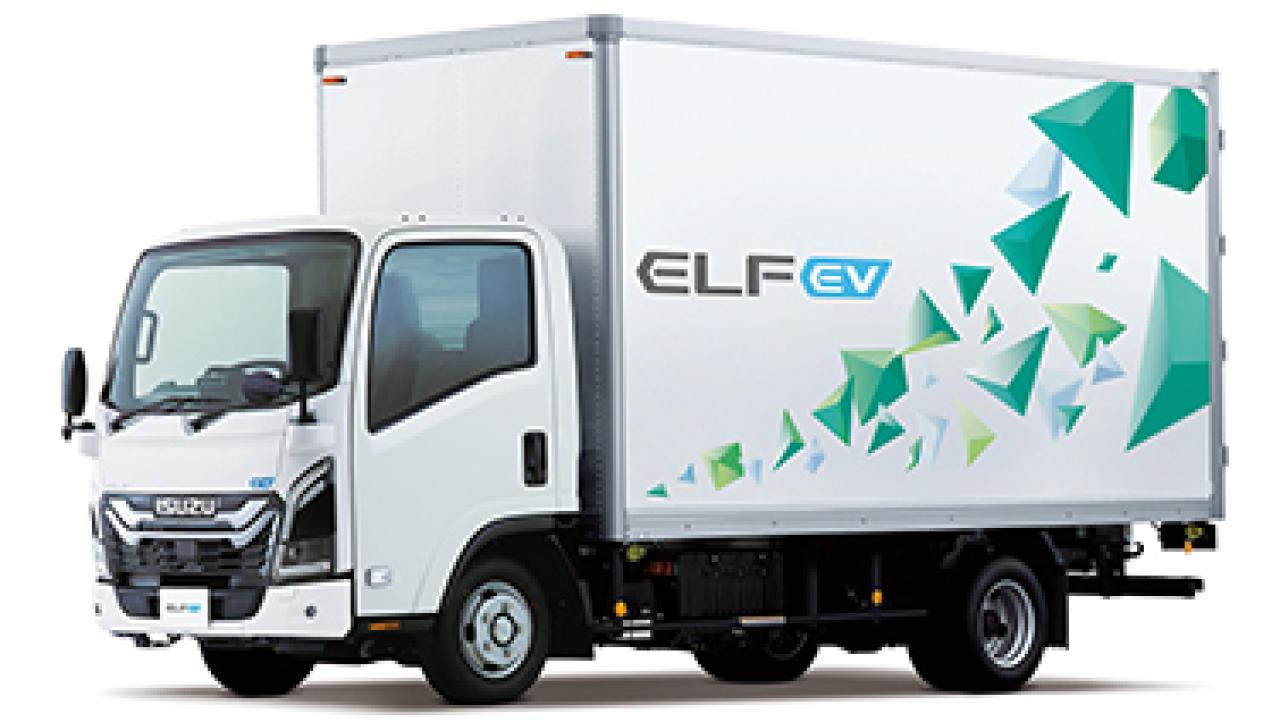
Isuzu Motors and Toyota Motor Corporation have announced a new partnership to develop Japan’s first mass-produced light-duty fuel cell electric truck, with production planned to begin in 2027.
The new vehicle will be built on Isuzu’s ELF EV platform and will incorporate Toyota’s third-generation fuel cell system. The companies say the collaboration is designed to meet the demanding, high-usage conditions typical of commercial vehicles while advancing efforts toward carbon-neutral logistics and a hydrogen-based energy society.
The truck will benefit from Isuzu’s I-MACS³ development architecture, which allows flexible integration of components, alongside Toyota’s next-generation fuel cell stack. Together, these technologies are expected to improve durability and extend the vehicle’s operational lifespan.
Cost remains a major barrier to wider adoption of fuel cell electric vehicles. To address this, Isuzu is working to optimise vehicle structure and streamline manufacturing processes, while Toyota is focusing on innovations in fuel cell design and production to lower overall costs.
The project also builds on previous joint initiatives, including the development of the ERGA FCV bus and trials conducted by Commercial Japan Partnership Technologies Corporation. Insights from these efforts will be used to refine system controls and improve reliability, key requirements for commercial fleet use.
Both companies are also collaborating with local governments and businesses across Japan to support the expansion of hydrogen infrastructure and adoption.
Isuzu stated it aims to expand hydrogen-powered commercial vehicle options by leveraging Japan’s strengths in fuel cell technology. Meanwhile, Toyota continues to position hydrogen as a central energy source, advancing initiatives across production, transport, storage, and use in partnership with industry stakeholders.