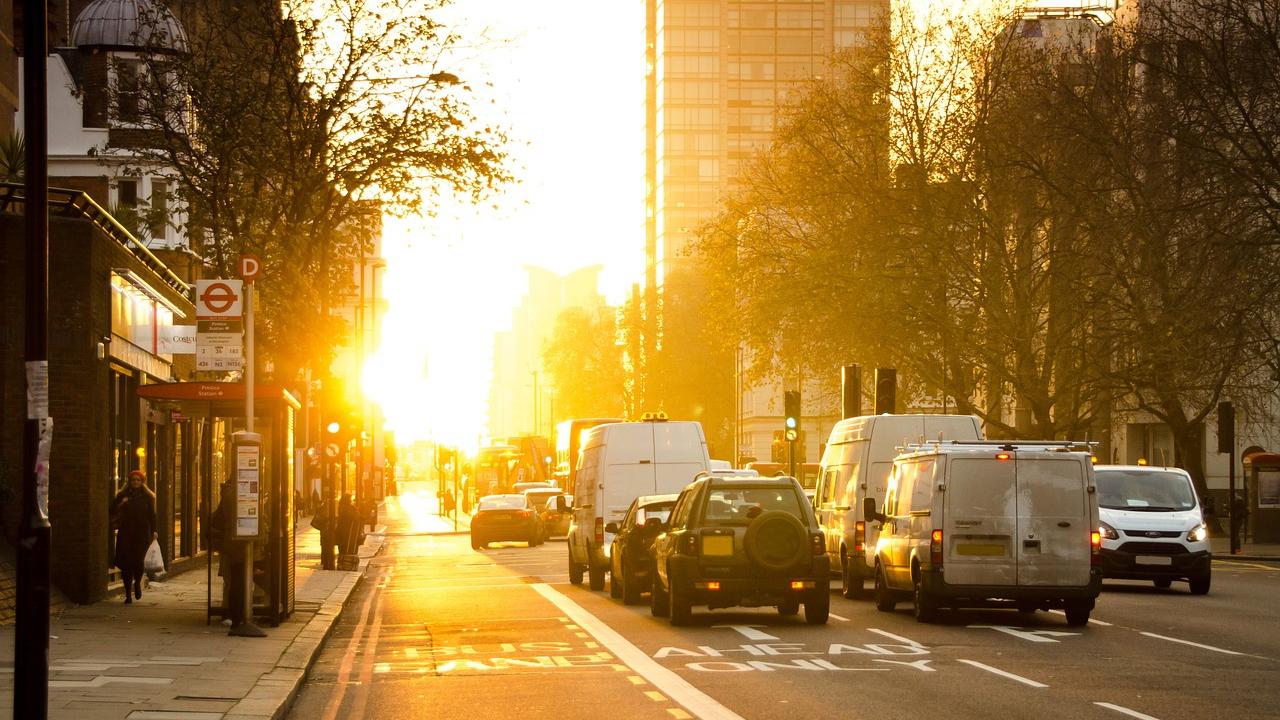
Research conducted for the Mayor of London, Sadiq Khan, has revealed that traffic on the capital's roads cost London’s economy £5.1bn a year, or £1,211 per driver
Sadiq Khan has warned that unless efforts increase to deliver a green, sustainable recovery from the pandemic, the capital could move from one public health and economy crisis to another.
More than 120km of cycle routes and tens of thousands of square metres of extra pavement space have been delivered since the pandemic started. Cycling during the pandemic increased by 22 per cent in outer London compared to spring 2019, with a seven per cent rise in inner London, and participation also broadened, particularly among people from minority ethnic communities. September and October 2021 were both record months for the Santander cycle hire scheme, with October seeing more than one million hires for the first time.
Public transport ridership plummeted by 95 per cent and is currently still significantly behind pre-pandemic levels, with buses at 70 per cent of normal demand and Tubes at 55 per cent. Car use has been more resilient than public transport, and has been the fastest mode of transport to recover to near-normal levels of use after each lockdown, with data showing it has been close to - although not above - pre-pandemic levels for much of the latter half of 2021.
The overall active, efficient and sustainable mode share for travel in 2020 - the number of trips by walking, cycling and public transport, as a proportion of all trips - is estimated at 58.3 per cent compared to 63.2 per cent in 2019; showing that the key metric the Mayor is trying to increase as part of his Transport Strategy has reduced by five per cent over the pandemic, as a higher proportion of trips are now being driven. This reduction is a result of a fourteen per cent drop in the share of trips made by public transport which offsets a substantial increase witnessed in the share of trips made by walking or cycling – a rise of nine per cent in 2020.
The reduction is also despite the fact that more than a third of car trips made by Londoners could be walked in under 25 minutes and two thirds could be cycled in under 20 minutes.
Since 2011, as London has grown in population, it has also experienced a huge increase in the number of miles driven on its roads – rising by 3.5 billion miles between 2011 and 2019 - from 19.1 billion miles in 2011 to 22.6 billion miles by 2019.* A staggering 18.7 billion miles were still driven in 2020, despite the COVID lockdowns.
Data from external providers shows that as the number of vehicle miles has increased, so too has the time lost by drivers to traffic. TomTom data shows that in 2017 an average of 144 hours per year, per driver, were spent sitting in traffic - almost 20 minutes extra for a 30-minute trip during the evening rush hour. In 2018, this increased to 147 hours, and in 2019, to 149 hours per year. This equates to 6 days and 5 hours in total for an average London driver. In 2020, traffic was much reduced, but Londoners still spent an extra 15 minutes per 30 minute trip driving because of congestion – 115 hours per year. INRIX data shows a similar trend, with 148 hours lost a year by drivers on average in 2021. This is estimated to cost the economy £5.1bn a year, or £1,211 per driver, based on an estimate of the average value of earnings that drivers could be making, or the leisure time they could be enjoying, if they were not stuck in traffic. These trends are also reflected in TfL’s traffic speed data.
The Mayor of London, Sadiq Khan, said: “Whilst we have made huge strides in increasing walking and cycling in London throughout the pandemic, car use has remained consistently high. If we do not double down on our efforts to deliver a greener, more sustainable future we will replace one public health crisis with another – caused by filthy air and gridlocked roads. The cost to both Londoners and the capital cannot be underestimated, with days wasted stuck in traffic, billions lost to the economy and increased road danger and health impacts. Most traffic is caused simply by there being too great a demand for limited street space, meaning the only long-term solution can be to significantly reduce car use in favour of greener means of travel.”