With growing industry interest in shared depot charging and real-world collaborations already delivering results, shared infrastructure is fast emerging as a critical enabler to electrification. So how does it work?
The concept of shared EV charging infrastructure has moved from a discussion point to a practical solution for fleet electrification. It is a topic that now surfaces at almost every GREENFLEET Roundtable, reflecting a shift in fleet thinking about how to electrify within infrastructure constraints.
At the heart of this shift is a simple reality; charging infrastructure remains one of the most significant barriers to electrification.
According to a recent whitepaper by Dawsongroup vans, only 27 per cent of respondents have installed chargers on-site, despite 53 per cent stating that their premises are suitable for EV charging infrastructure.
Furthermore 47 per cent of respondents reported that their premises were either unsuitable for EV charging or were unsure about their suitability, suggesting that uncertainty and lack of clarity remain major barriers to progress.
Amongst these hesitations, research from the Association of Fleet Professionals (AFP) found that 58 per cent of van fleets would consider sharing their charging infrastructure, while 62% are open to reciprocal agreements with other operators.
This growing openness reflects a broader recognition that the traditional approach to depot infrastructure may not be compatible with the pace and scale required for decarbonisation, particularly in sectors such as HGV logistics and blue light services, where operational demands are less flexible and public infrastructure is often unsuitable.
Benefits of shared charging
Shared infrastructure offers several immediate and tangible benefits. Perhaps the most significant is improved access to reliable charging in locations where public provision is either limited or impractical. For HGV operators, in particular, the current public charging network often lacks both the physical space and the power capacity required. Collaborative depot access helps bridge that gap, enabling routes that would otherwise be unviable.
A clear example of this in action is the collaboration between Voltloader and Welch Group. By utilising Welch Group’s charging infrastructure, Voltloader was able to complete a job that would have been impossible within the constraints of battery range alone.
As Voltloader’s Bertie Steggles noted, access to a shared network of high-powered chargers is “crucial” for all-electric haulage operations. He said: "As an all-electric haulage business, having a shared network of high-powered chargers is crucial. This collaboration, along with our mission of opening more of our own shared charging sites, supports each other and the broader rollout of electric vehicles across the UK."
Welch Group is now enabling third party fleets to use its depot charging through an official booking system and has begun sharing it with Openreach.
Openreach has nearly 7,000 electric vehicles on the road and its engineers use a mix of home charging, public charging and chargers at operational sites. This model adds a further secure, bookable charging option for engineers who can’t charge at home.
Delivered through Voltempo’s Depot Charging as a Service model and Corpay’s fleet payment platform, the solution integrates charging infrastructure, energy procurement and fleet payments into a single system.
Meanwhile, Welch Group retains full operational control while enabling excess capacity to be booked out, allowing it to improve utilisation and generate new revenue.
Extending useable infrastructure
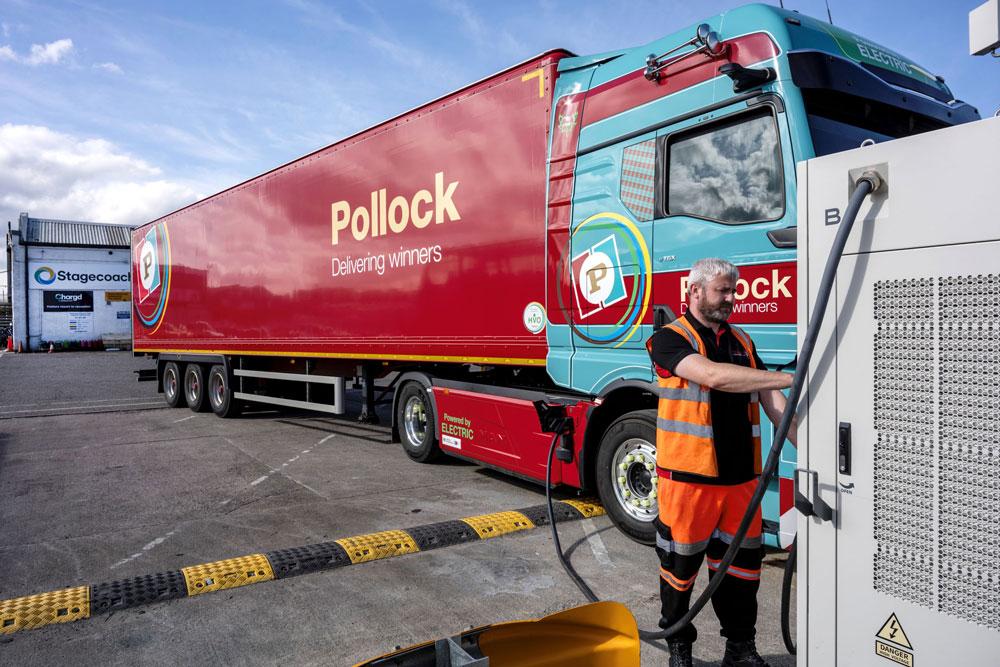
Similarly, partnerships facilitated by Paua are helping to formalise and scale this approach. Collaborations with DAF dealerships Motus and Ford & Slater are opening up depot-based charging to third-party fleets across multiple UK locations. Crucially, these sites are brand-agnostic, supporting vehicles from any manufacturer and reinforcing the idea that shared infrastructure must be interoperable if it is to succeed. Paua has integrated both partners into its platform, enabling fleets to access depot infrastructure using its EV charging payment and depot sharing capability.
Niall Riddell, CEO and Co-Founder of Paua, said: "By opening trusted depot infrastructure to other fleets, we can rapidly extend the usable charging network for electric trucks across the UK.”
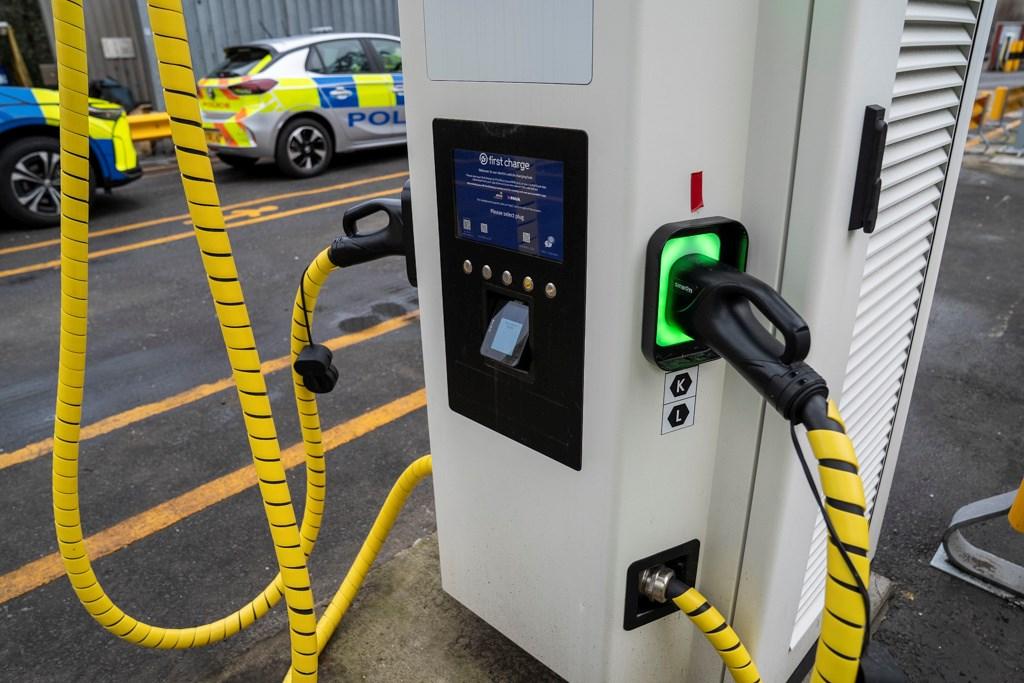
Also opening up its charging depot, bus operator First Bus has commenced its ‘First Charge’ initiative, allowing its infrastructure to be used by businesses, fleet operators and, in some cases, the public.
Its Caledonia depot in Glasgow now functions as a shared charging hub, supporting dozens of vehicles simultaneously and offering a range of access and payment options. This model is already supporting organisations such as DPD, Centrica, Openreach and Police Scotland.
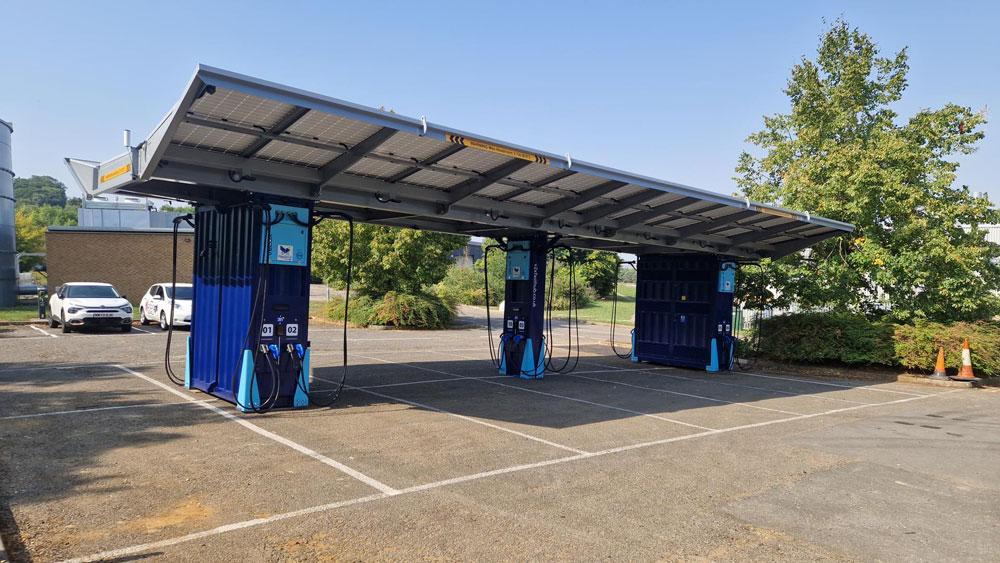
Meanwhile, Essex Police is using high-power charging infrastructure at First Bus’s Basildon depot, highlighting the value of shared charging for emergency services that require dependable, high-capacity infrastructure to maintain operational readiness.
Jason Tyrrell, Acting Head of Fleet at Essex Police, said: “Moving to electric vehicles is a key part of our sustainability journey, but access to suitable charging infrastructure is essential. Working with First Bus through First Charge allows us to support the expansion of our electric fleet using existing, high-power infrastructure, while maintaining the operational resilience our service requires.”
Opening up charging
For fleets considering opening their own infrastructure to third parties, however, the opportunity comes with a set of practical and operational considerations. Health and safety is often the first concern raised. Allowing external vehicles onto private sites introduces new risks, from traffic management to site security and liability. Clear protocols, physical design considerations and potentially even staffing requirements need to be addressed to ensure safe operations.
Access and interoperability represent another critical challenge. For shared depot charging to work effectively in a commercial context, fleets will need to consider whether to adopt roaming platforms, integrate with existing networks, or develop their own access solutions. The success of models like Paua suggests that aggregation platforms may play a key role in simplifying this complexity.
Cost, meanwhile, remains both a motivator and a potential barrier. Early adopters are already sharing their infrastructure, but pricing structures vary widely. For site hosts, there is a balance to strike between recovering investment and offering competitive rates that attract users. For visiting fleets, inconsistent pricing can complicate route planning and cost forecasting. Transparent, predictable pricing models will be essential if shared charging is to become a mainstream solution.
Despite these considerations, the appetite for shared depot charging is high. As Paul Hollick of the Association of Fleet Professionals has noted, "shared charging is increasingly seen as a viable way to overcome infrastructure limitations. The mechanisms for payment, booking and access are still evolving, but they are far from insurmountable".
For fleets on both sides of the equation - those offering infrastructure and those seeking access - the key takeaway is that collaboration is essential to make shared depot charging a success.
Image shows First Bus’s electric depot in Basildon, which is utilised by Essex Police.