
As manufacturers double down on electrification and drivers embrace zero-emission motoring, we take a look at a selection of new battery electric cars and vans scheduled to launch this year
In recent years, manufacturers have accelerated the move away from petrol and diesel models in order to meet increasingly stringent ZEV mandate targets, triggering a surge in new battery electric vehicle (BEV) launches across every segment.
Investment at scale now means buyers can choose from more than 160 electric car models, alongside more than 40 zero-emission van options.
Demand is rising quickly too. During 2025, almost half a million new battery electric cars were registered in the UK, with 473,348 units sold – more than the total for 2021 and 2022 combined. As a result, BEVs accounted for 23.4 per cent of the new car market, putting the UK on track to become Europe’s second-largest EV market by volume.
With momentum building and even more models arriving, 2026 is set to be another landmark year. Here, we take a look at a selection of exciting battery electric vehicles scheduled to launch this year.
BMW iX3
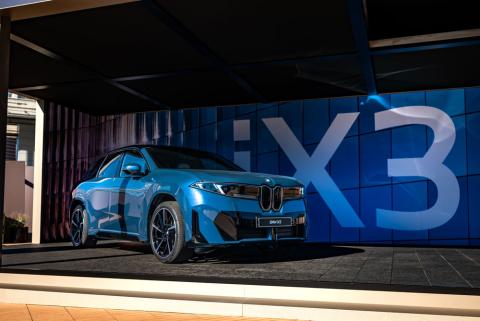
Due in the UK in March, the new iX3 debuts BMW’s Neue Klasse generation and showcases major advances in software, user interaction, electrified performance and charging.
The iX3 will house its new in-house developed infotainment software, BMW Operating System X and the next-generation BMW Panoramic iDrive. The highlight is the enhanced, AI-powered personal assistant, now integrated with Amazon Alexa+.
The BMW iX3 is powered by sixth-generation eDrive technology. The iX3 50 xDrive features a dual-motor all-wheel-drive setup producing 345 kW (469 hp) and 645 Nm of torque, delivering 0–100 km/h in 4.9 seconds. A new 800V electrical architecture, combined with cylindrical battery cells and a “cell-to-pack” design, enables a usable battery capacity of 108.7 kWh and a WLTP range of up to 500 miles. BMW says the new drivetrain cuts energy losses by 40 per cent compared with the previous generation.
Charging performance is equally central to the iX3’s proposition. DC fast charging at up to 400 kW allows up to 372 km (231 miles) of range to be added in ten minutes, with a 10–80 per cent charge achievable in 21 minutes. The iX3 also supports bidirectional charging, including Vehicle-to-Load, Vehicle-to-Home and Vehicle-to-Grid functionality.
Cupra Raval
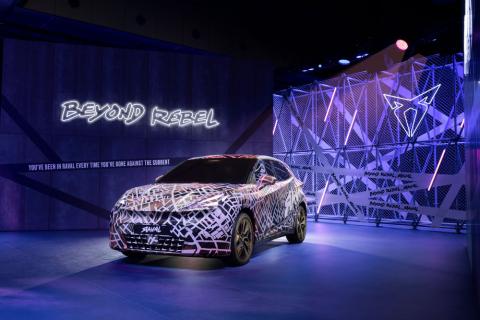
The CUPRA Raval signals a new chapter for the brand, redefining the compact electric car. Built on Volkswagen Group’s MEB+ platform with front-wheel drive, the Raval combines agility and practicality in a four-metre-long vehicle that’s as suited to city driving as it is to longer journeys, thanks to its generous interior space and boot capacity.
Performance is central to the Raval’s identity. A lowered sport chassis, finely tuned suspension, progressive steering and advanced braking will deliver dynamic handling, while higher-spec versions, including the VZ, enhance performance further with adaptive suspension, wider track, electronic differential and powerful electric outputs.
Due to come to the UK early to mid 2026, the Raval will be available in multiple trims and launch editions, with the entry-level priced from around £22,700. It offers a range of power and battery options, with the VZ Extreme (166kW) reporting a range of up to 250 miles.
Geely EX2
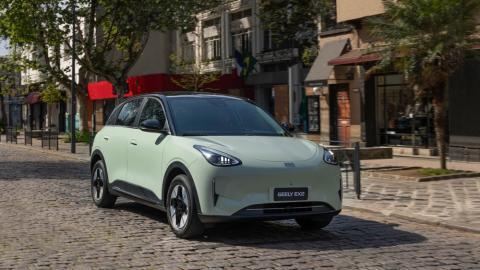
Scheduled for an autumn 2026 release, the Geely EX2 is a compact electric hatchback positioned to compete directly with the Renault 5 E-Tech and BYD Dolphin Surf. Built on Geely’s GEA platform – already used by the larger EX5 SUV in the UK – the EX2’s power comes from lithium iron phosphate batteries ranging between 30 and 40kWh, paired with a single electric motor producing either 78bhp or 114bhp. A Chinese-cycle range of around 250 miles has been quoted, although this is expected to drop under WLTP testing.
The EX2 measures 4,135mm long and benefits from a 2,650mm wheelbase, delivering a balance of agility and interior space. Safety is a core focus, with a reinforced body structure and a comprehensive battery protection system designed to set a benchmark for city EVs.
Already a major sales success in China under the name Xingyuan, the EX2 has exceeded 400,000 units sold and ranked among the world’s best-selling BEVs in 2025. Following its launch in Brazil, the Geely EX2 is set to roll out across Europe, Southeast Asia and other global markets within the year.
Kia EV2
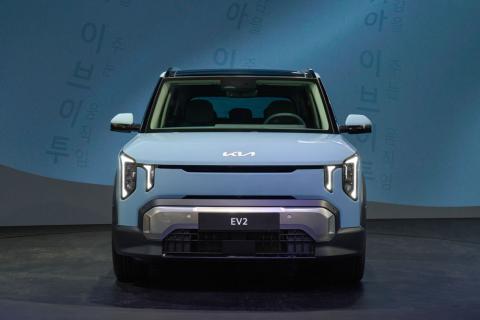
The Kia EV2 is a new electric B-segment SUV that serves as the entry point to Kia’s expanding EV line-up.
The EV2 is Kia’s most compact electric model to date, and power comes from two battery options: a 42.2kWh standard-range battery and a 61.0kWh long-range battery, delivering up to an estimated 278 miles of range (WLTP). Fast DC charging, 11kW and 22kW AC charging, and bidirectional charging capabilities further enhance everyday usability.
The EV2 introduces Kia’s latest infotainment system, with triple-screen displays, over-the-air updates and connected services. Despite its entry-level positioning, the EV2 offers upper-segment features such as advanced driver-assistance systems, digital key technology, remote parking assist and optional premium audio.
Production begins in early 2026, with UK launch expected in the summer.
Nissan Leaf
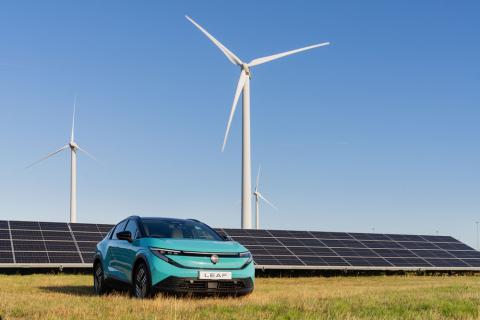
The third-generation Nissan LEAF introduces a major leap in battery technology and driving range, powered by next-generation batteries supplied by a new gigafactory in Sunderland. Featuring increased energy density, the LEAF’s 75kWh battery delivers a range of up to 386 miles (WLTP), setting a new benchmark for the model. It also supports 150kW DC fast charging, allowing up to 273 miles of range to be added in just 30 minutes, making the new LEAF more practical and long-distance-ready than ever before.
Since its debut in 2010, LEAF has sold close to 700,000 units worldwide – and this new incarnation is due to come out in early 2026. Nissan says it has re-designed and re-engineered the Leaf to meet the needs of modern EV customers, while remaining true to its roots.
Honda Super-N
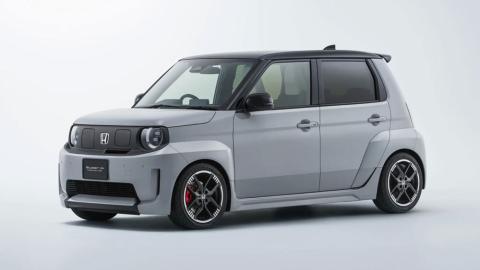
The Super-N was unveiled to the public as the Super EV Concept at the Goodwood Festival of Speed last year, where it made a bold statement about the future of small electric performance cars.
It’s a compact electric performance concept that’s built on the lightest platform from Honda’s N Series ‘Kei’ car range sold in Japan.
A standout feature is its innovative BOOST mode, which increases vehicle output to maximise performance. The vehicle also simulates a multi-gear shift through Active Sound Control, supported by dedicated interior displays and coordinated lighting effects, to heighten driver engagement.
The Honda Super-N is expected to offer a driving range of around 200 miles, balancing everyday usability with an emphasis on fun, responsiveness and dynamic driving.
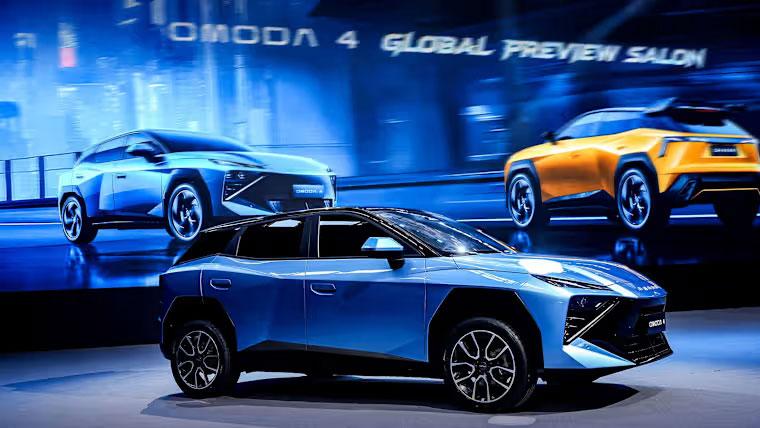
Omoda 4
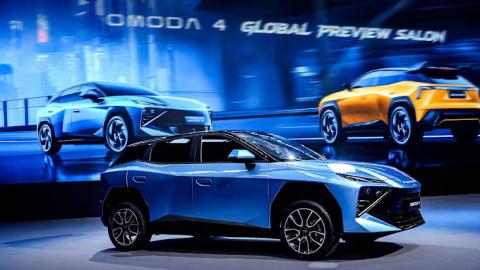
Omoda has unveiled the Omoda 4, a new compact SUV set to arrive in the UK in the second half of 2026. Aimed at a younger audience, it features the brand’s bold “Cyber Mecha” design, blending sharp, futuristic styling with a tech-focused interior.
The Omoda 4 will compete in the B-segment against rivals like the Ford Puma and Renault 4 E-Tech and is expected to be offered with both electric and plug-in hybrid powertrains. While full technical details are yet to be confirmed, early indications point to a range of around 250 miles and a starting price of roughly £30,000.
Changan Deepal S05
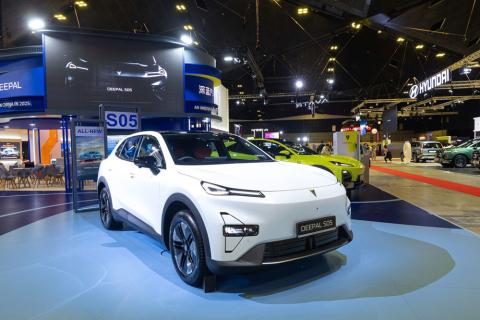
Arriving early 2026, the S05 is a smart, urban-focused electric SUV from Changan Automobile.
First launched in China in October 2024, the S05 has already recorded more than 60,000 sales, with strong performance in Thailand where it has led EV SUV registrations for consecutive months.
Despite its compact dimensions, the five-seater offers generous interior space, including a 492-litre rear boot and a 159-litre front trunk, supported by a 2,880mm wheelbase that enhances rear passenger comfort. Its 56.12kWh battery supports a range of up to 317 miles.
Inside, the S05 features an Augmented Reality Head-Up Display and a 15.4-inch voice-responsive touchscreen, alongside intelligent driver-assist systems and Remote Straight-In and Out parking functionality.
Skoda Epiq
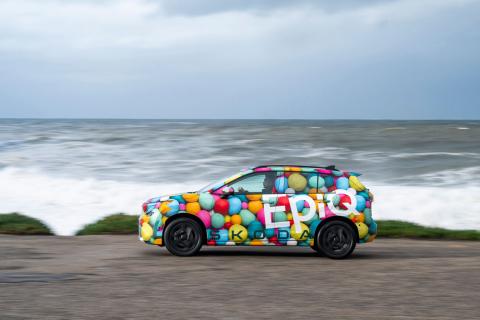
Škoda will unveil its electric Epiq in the first half of this year, positioning it as an affordable entry point to the brand’s expanding EV range.
The compact city SUV crossover is built on the new front-wheel-drive MEB+ platform, designed to maximise interior space while keeping weight and energy consumption low. With a driving range of up to 267 miles and DC fast-charging of up to 133kW – enabling a 10 to 80 per cent charge in just over 20 minutes in the most powerful version – the Epiq is engineered for practical everyday use in urban and suburban settings.
Offered with battery options of 38.5kWh and 55kWh and power outputs ranging from 85kW to 155kW, the Epiq will also feature advanced driver assistance systems, including Travel Assist 3.0 and a Top View panoramic camera.
IVECO eJolly and eSuperJolly
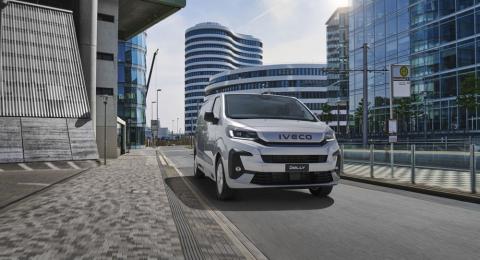
IVECO is launching the eJolly and eSuperJolly at the Commercial Vehicle Show in April 2026, two battery-electric vans designed for urban and mainstream deliveries.
The eJolly, with a gross vehicle weight of 2.8 to 3.2 tonnes, is aimed at inner-city operations and offers two battery options: a 49kWh pack delivering up to 140 miles of range, or a 75kWh pack extending range to as much as 220 miles, depending on usage.
Fast charging at up to 100kW enables around 60 miles of range to be recovered in just 15 minutes, helping to maximise uptime. With payloads of up to 1,175kg, sub-1.9m height for access to restricted car parks, and an available 400V ePTO for specialist conversions, it is positioned as a flexible option for urban fleets.
The larger eSuperJolly, spanning 3.5 to 4.25 tonnes GVW, is designed for heavier-duty urban and regional work. It features a 110kWh battery offering a range of up to 260 miles, alongside ultra-fast charging that can also add 60 mile of range in 15 minutes. With payload capacity of up to 1.4 tonnes and cargo volume of up to 17m3, it is engineered to balance range and load-carrying capability.
Renault Trafic Van E-Tech

The new Renault Trafic Van E-Tech is a medium LCV built on a dedicated all-electric platform and offering up to 280 miles (WLTP) of range.
Fleet operators can choose between a long-range 450km NMC battery, available from launch, or a lower-cost 350km urban-range LFP battery arriving later. Thanks to 800V architecture, the van can charge from 15 per cent to 80 per cent in around 20 minutes, recovering up to 160 miles of range.
Designed with urban use in mind, the Trafic offers load volumes of 5.1m3 (L1) or 5.8m3 (L2), a payload of up to 1.25 tonnes and towing capacity of two tonnes. Its reduced 1.90m height allows access to underground car parks, while a tight 10.3m turning circle boosts manoeuvrability.
Built in France, the Trafic Van E-Tech electric is due on UK roads in late 2026.